Kropki Sudoku Dots Explained in One Short Example
A four-cell row with a white dot and a black dot shows the Kropki rules. 4 and 5 fit the white dot, 3 and 7 fail the black dot, and 3 and 6 pass because 6 is double 3.
Transcript
The rule
Kropki sudoku adds small dots on the borders between cells. A white dot means the two digits are one apart, like 4 and 5. A black dot means one digit is double the other, like 3 and 6.
The dots cut each cell down to a handful of options. Check the last line of the rules too. If all dots are given, every pair without a dot is neither consecutive nor in a 1:2 ratio, so the blank borders carry clues as well.
Worth memorizing
5, 7 and 9 can never sit on a black dot.
Their doubles are over 9 and their halves aren’t whole.
1 and 2 fit both colors
they’re consecutive and one is double the other.
Watch the last line of the rules.
“All dots are given” means every pair without a dot is neither consecutive nor 1:2.
More rule videos
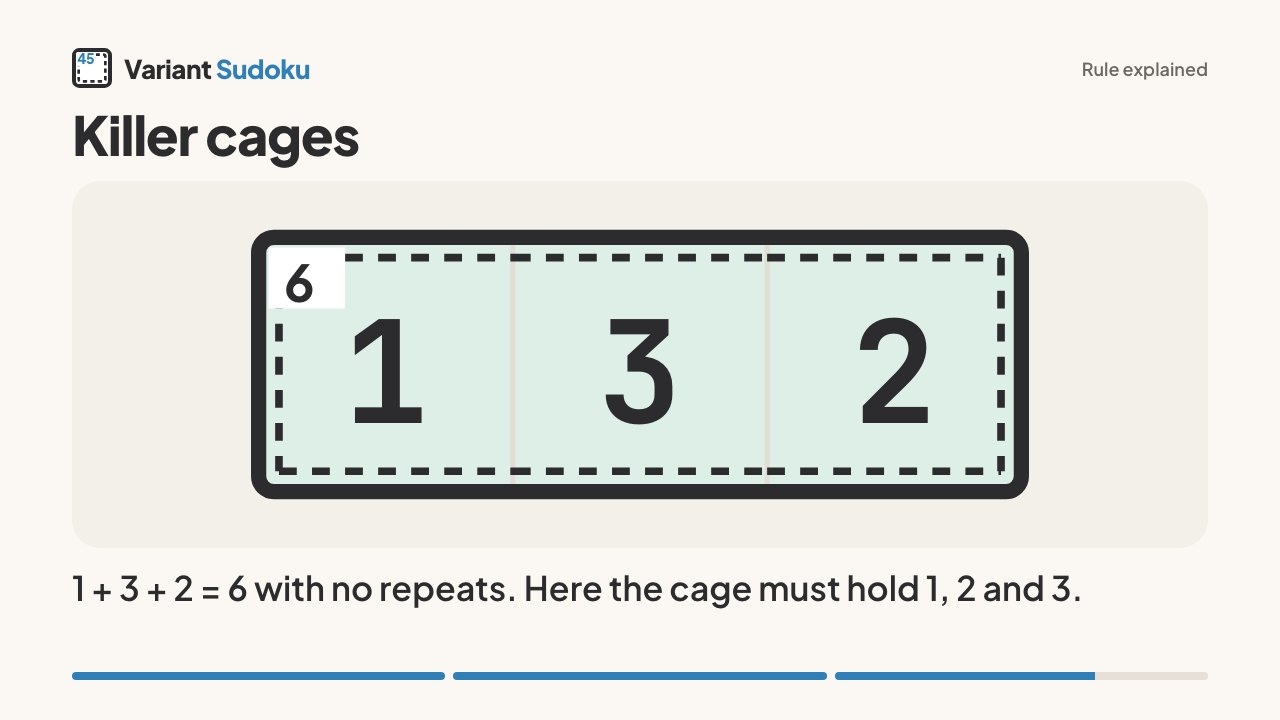 0:15Killer cagesKiller Sudoku Rules Explained in One Short Example
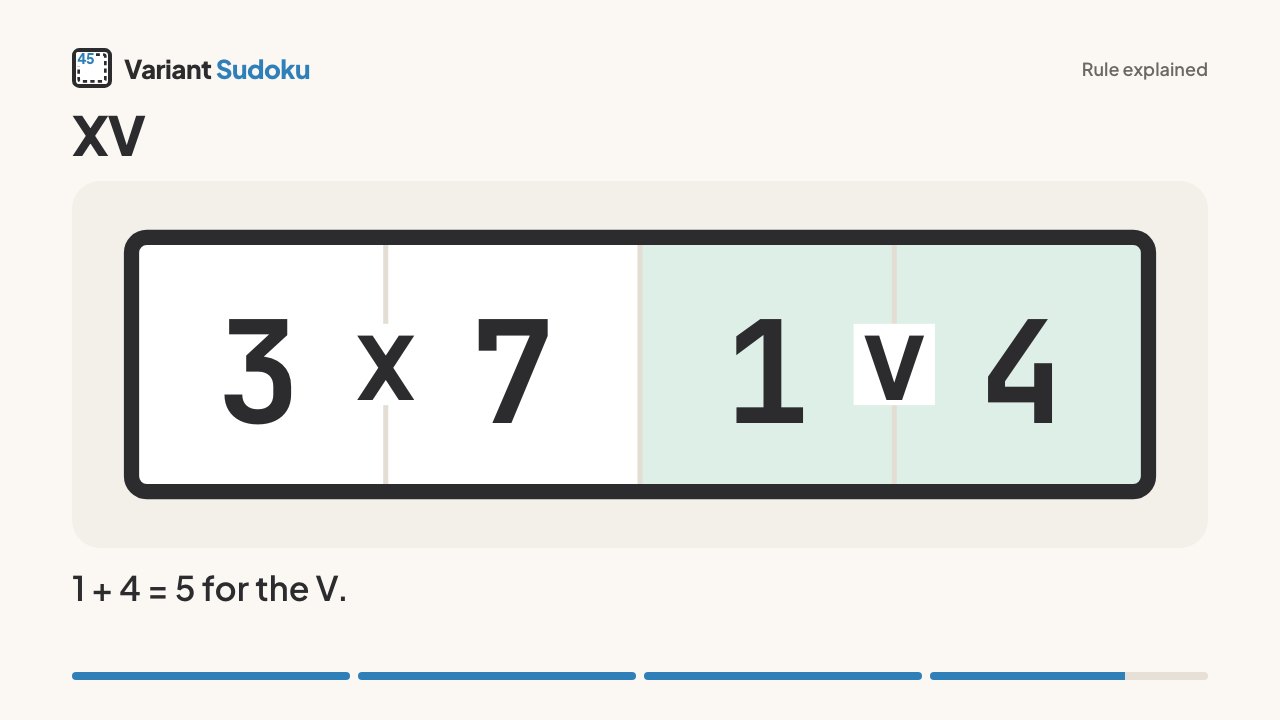 0:18XVXV Sudoku Rules Explained in One Short Example
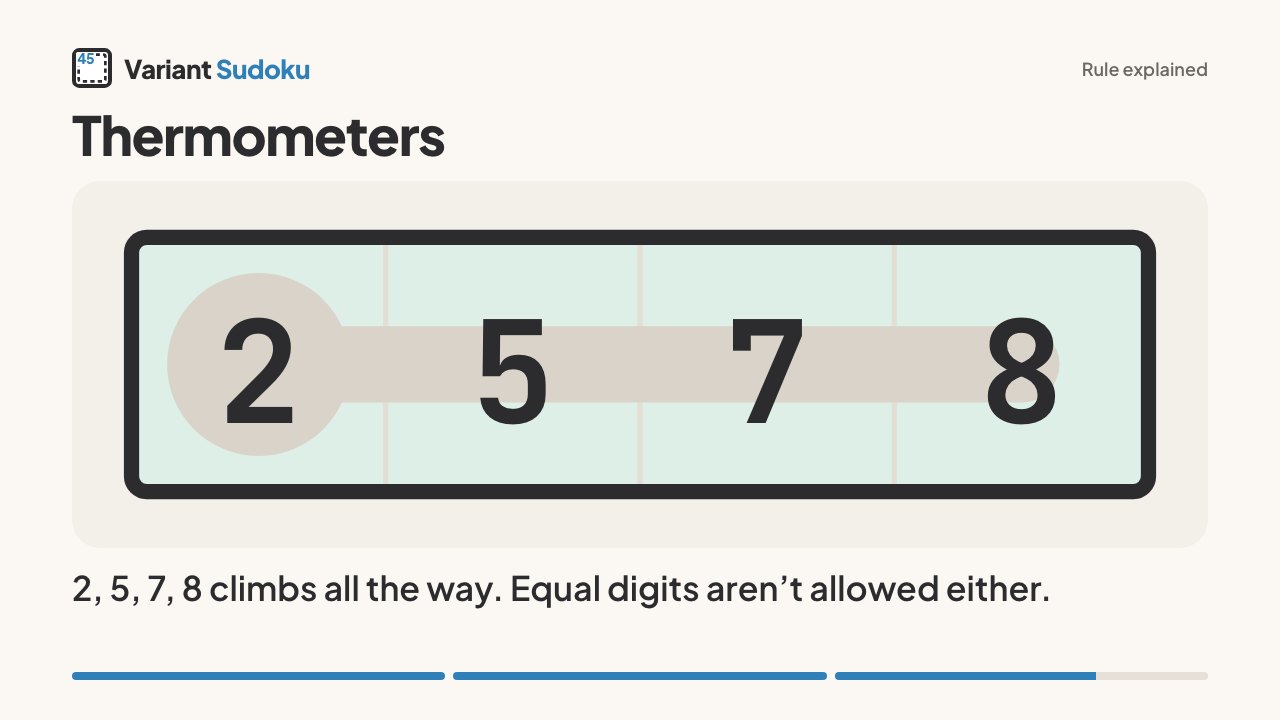 0:15ThermometersThermo Sudoku Rules Explained in One Short Example
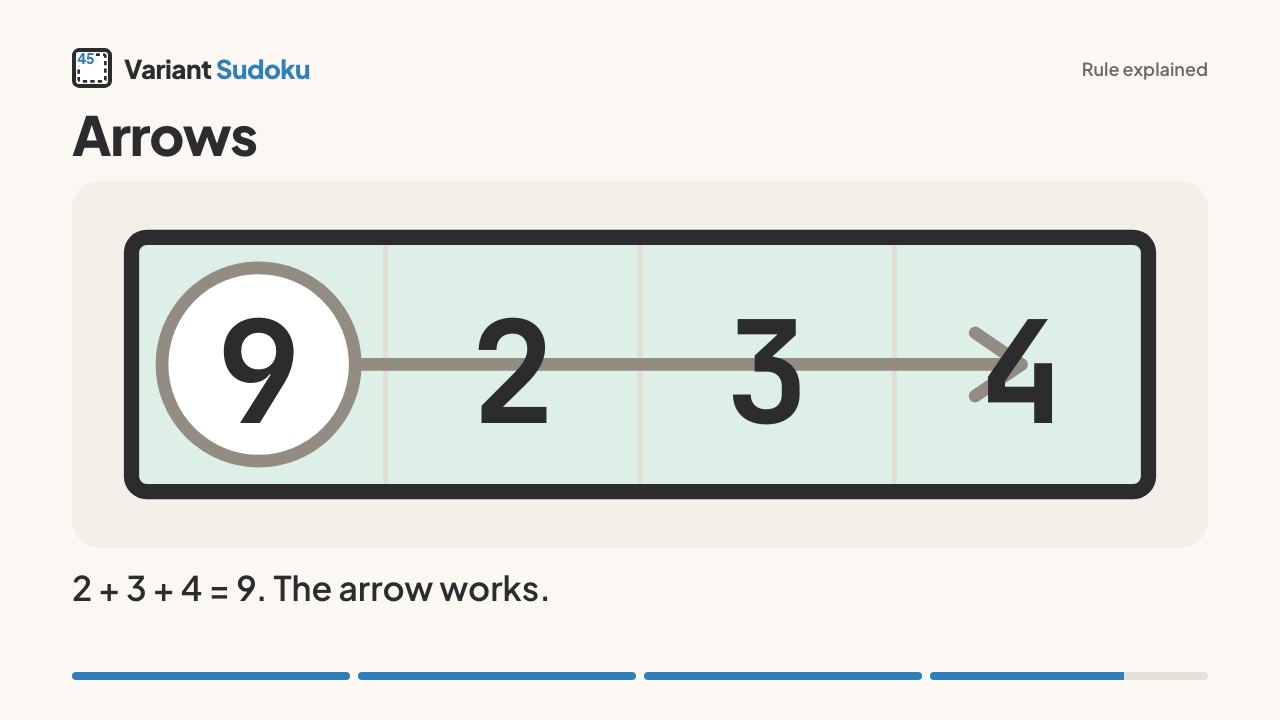 0:18ArrowsArrow Sudoku Rules Explained in One Short Example
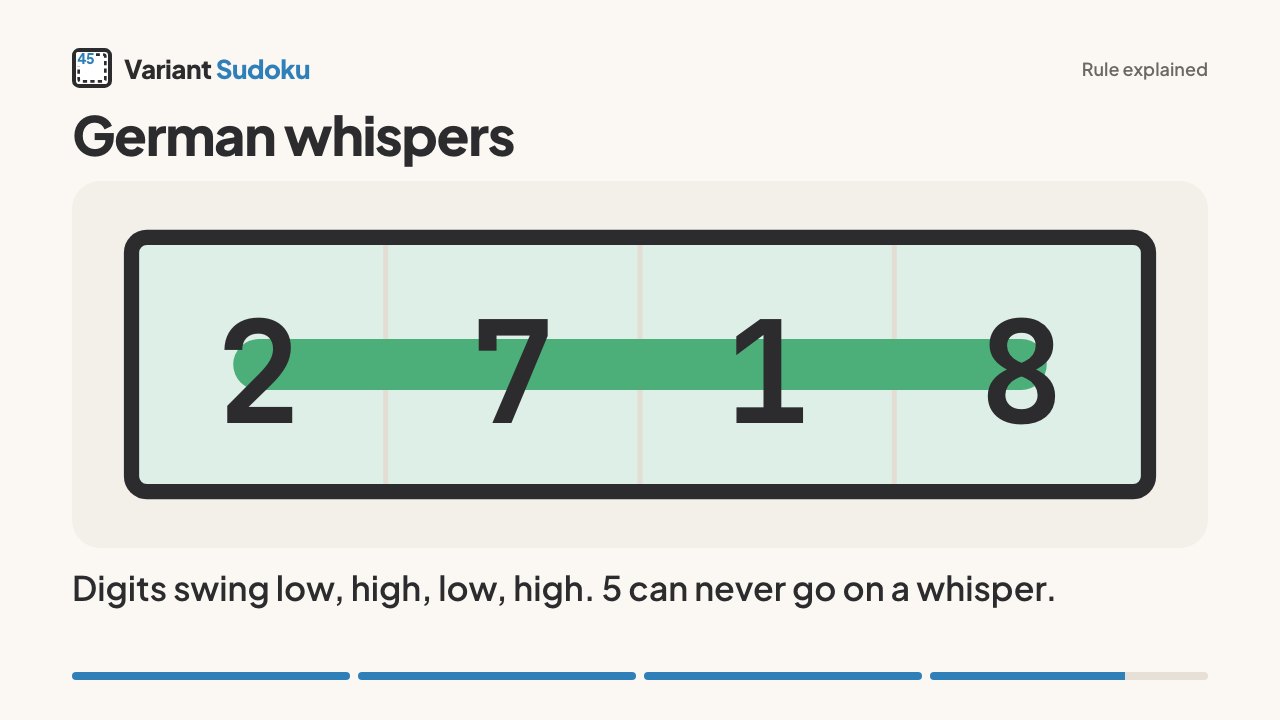 0:18German whispersGerman Whispers Sudoku Explained in One Short Example
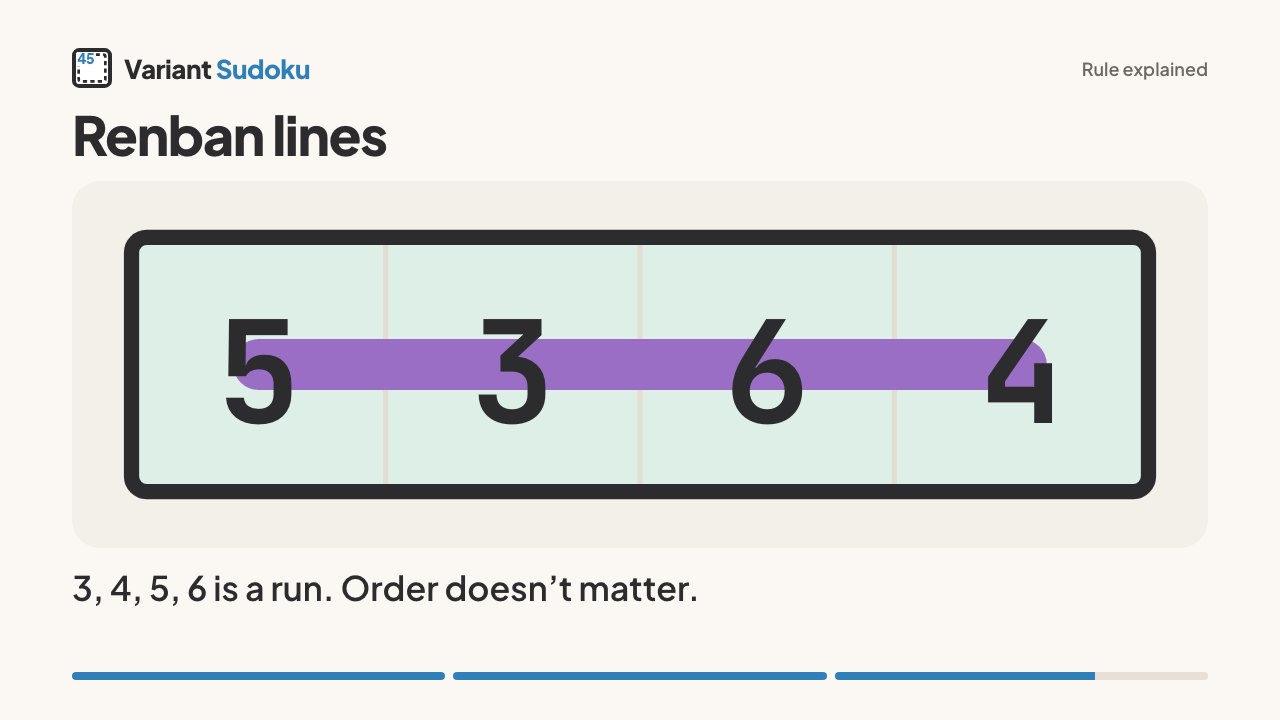 0:15Renban linesRenban Lines Explained in One Short Example
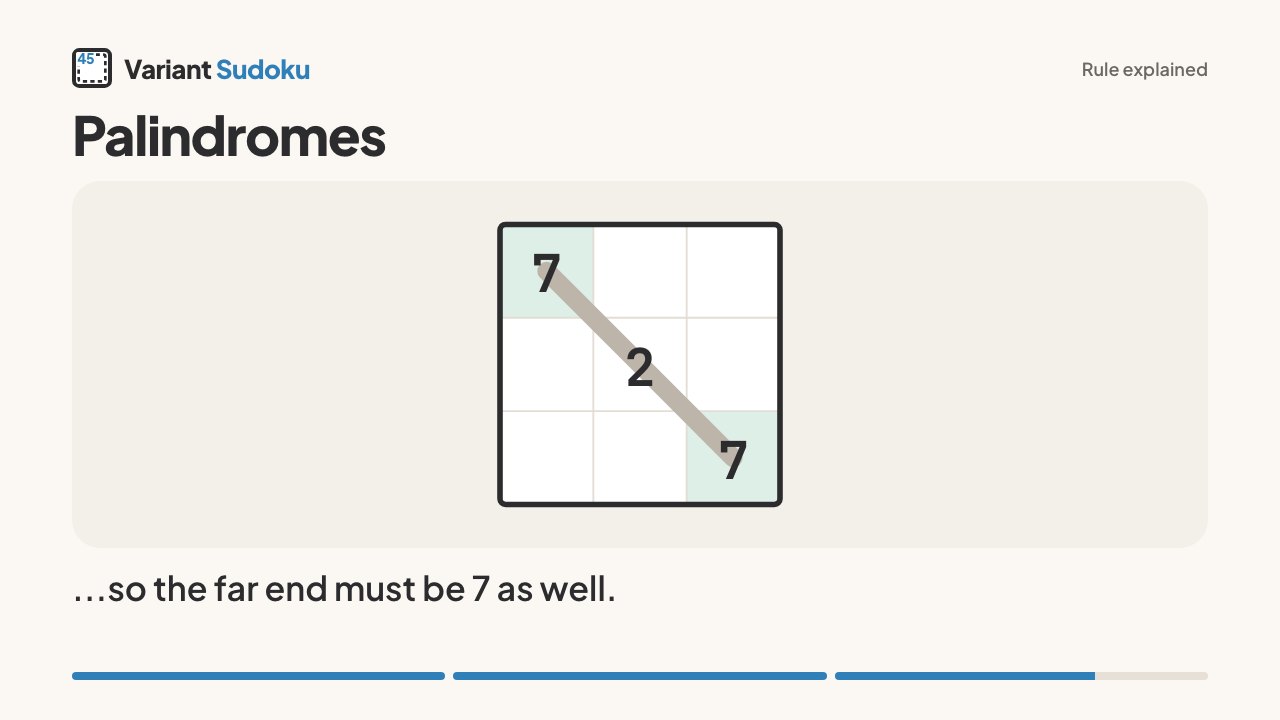 0:15PalindromesPalindrome Sudoku Lines Explained in One Short Example
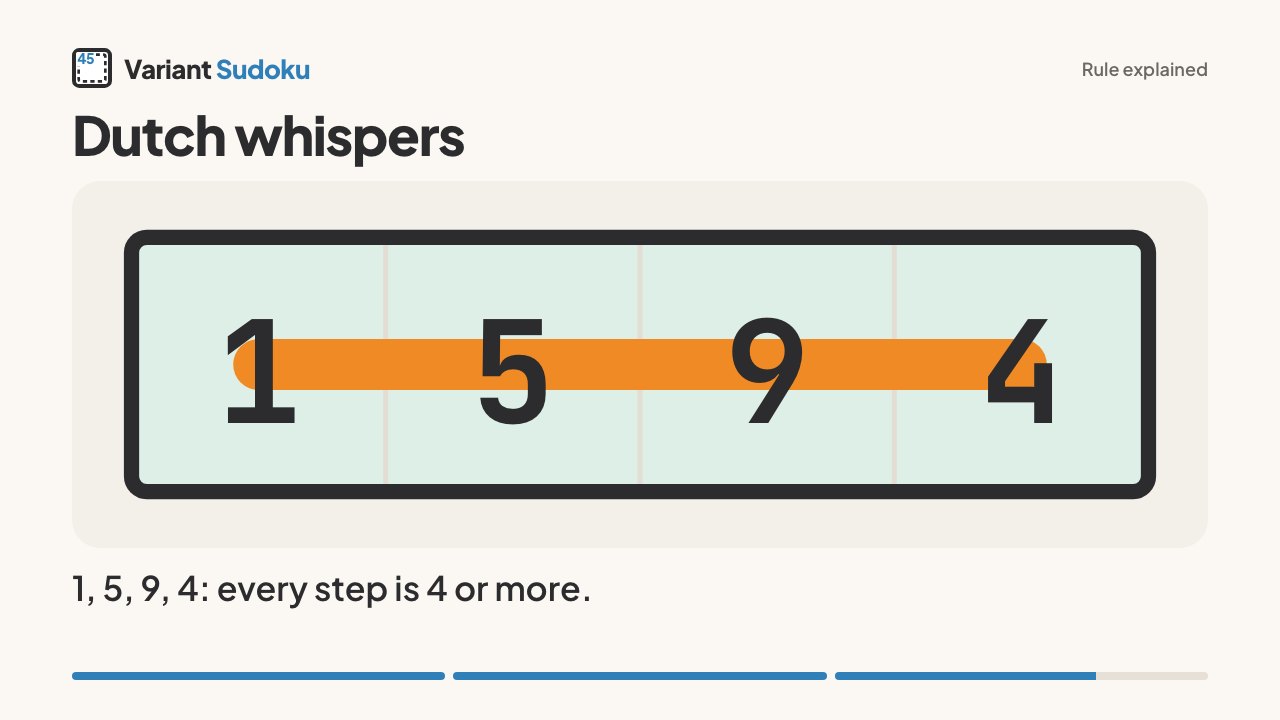 0:15Dutch whispersDutch Whispers Sudoku Explained in One Short Example