Diagonal Sudoku (Sudoku X) Explained in One Short Example
A 4x4 example marks one diagonal. Two 3s on the same diagonal break the rule, and a 3 and a 7 on it are fine.
Transcript
The rule
Diagonal sudoku marks one or both long diagonals of the grid. Digits can't repeat along a marked diagonal, so in a 9x9 grid each marked diagonal holds 1 to 9 exactly once.
A diagonal works like an extra row that runs through three boxes. It gives you another group to check for singles, and every digit on it rules out more cells.
Worth memorizing
A marked diagonal works like an extra row: in a 9×9, it holds 1 to 9 once.
The center cell is on both diagonals when both are marked.
More rule videos
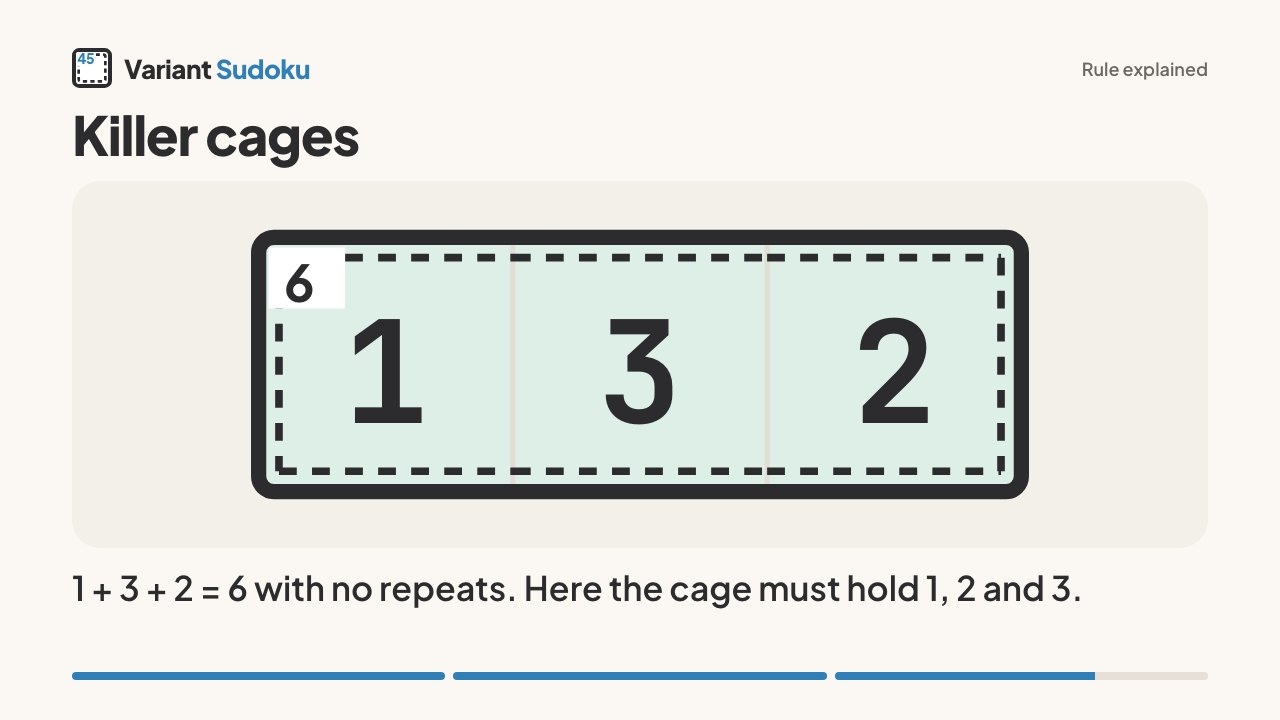 0:15Killer cagesKiller Sudoku Rules Explained in One Short Example
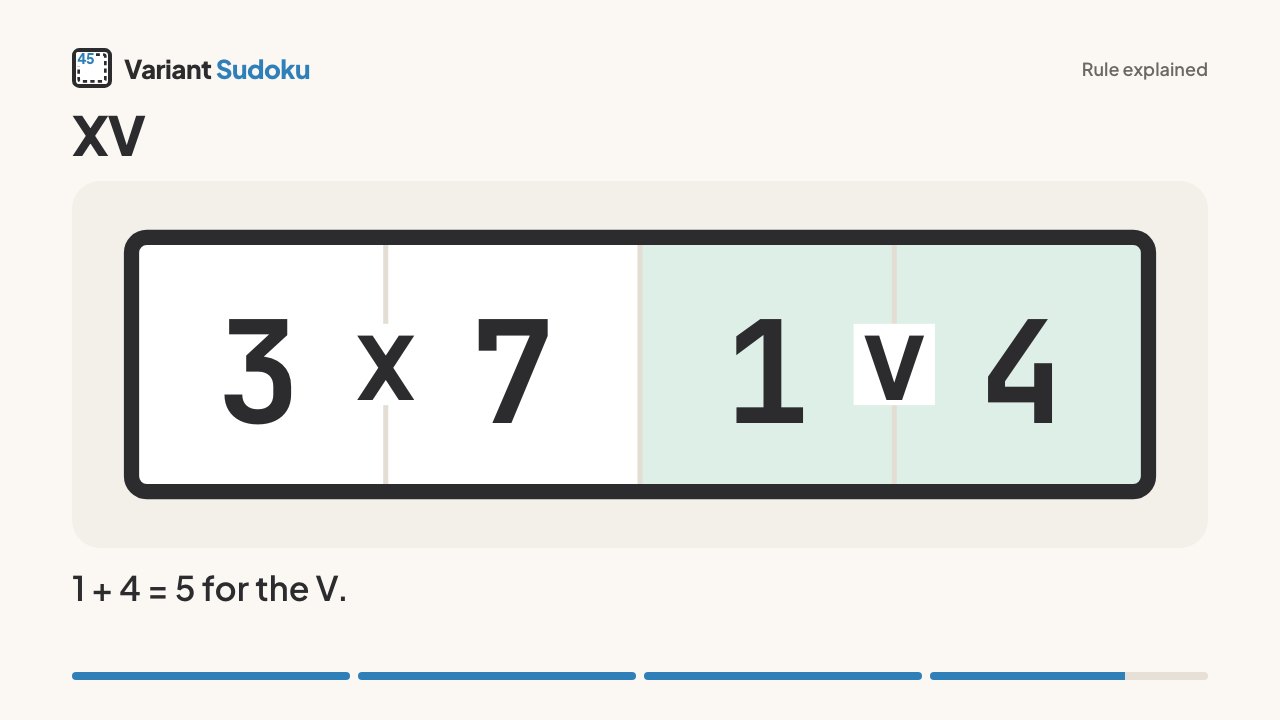 0:18XVXV Sudoku Rules Explained in One Short Example
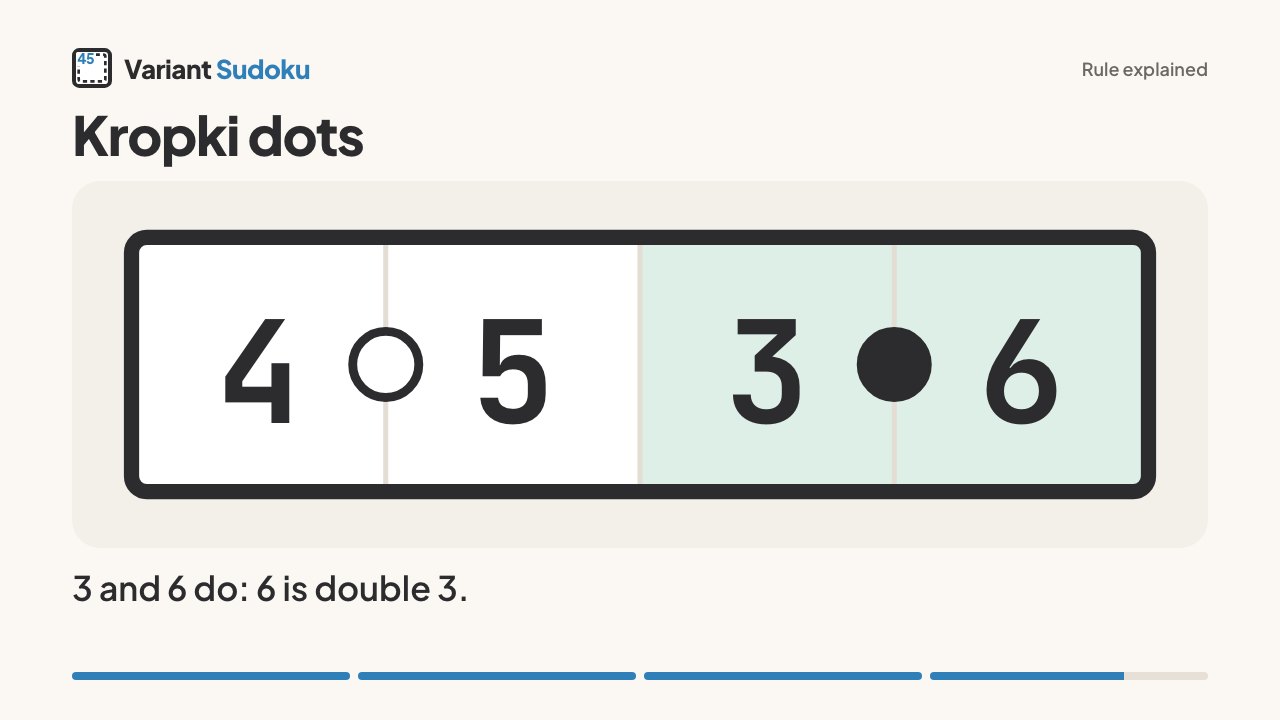 0:18Kropki dotsKropki Sudoku Dots Explained in One Short Example
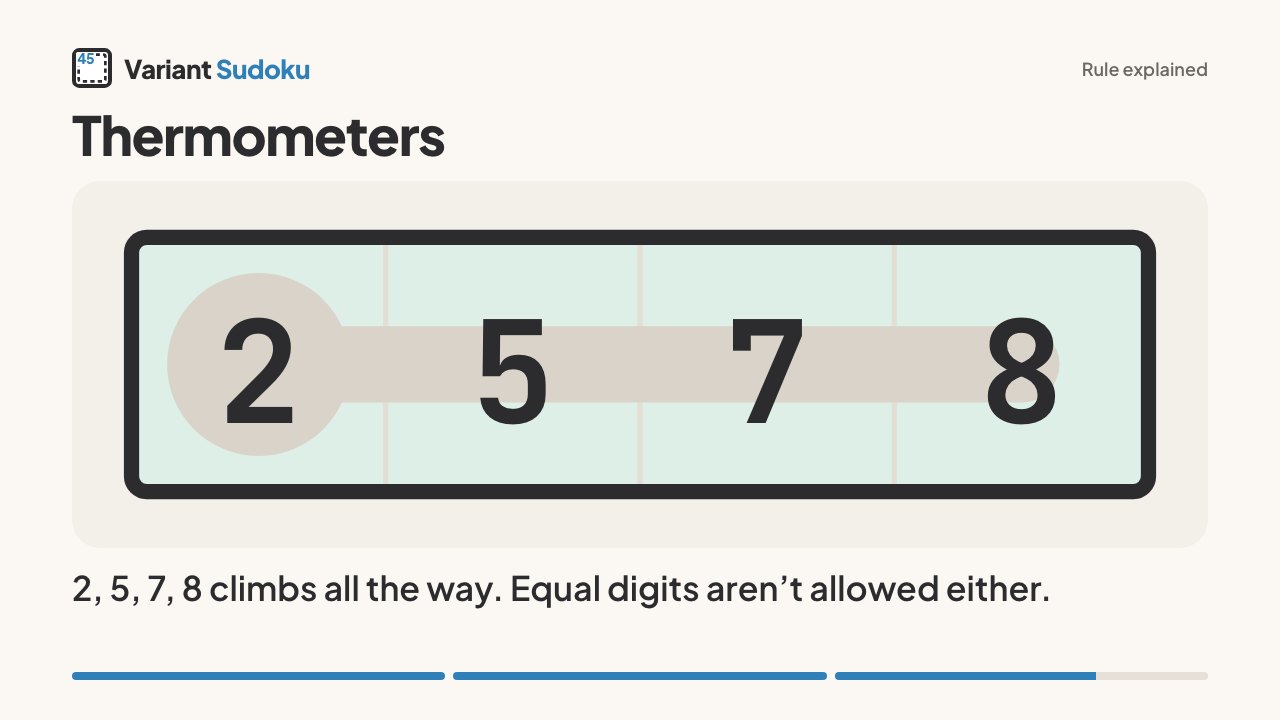 0:15ThermometersThermo Sudoku Rules Explained in One Short Example
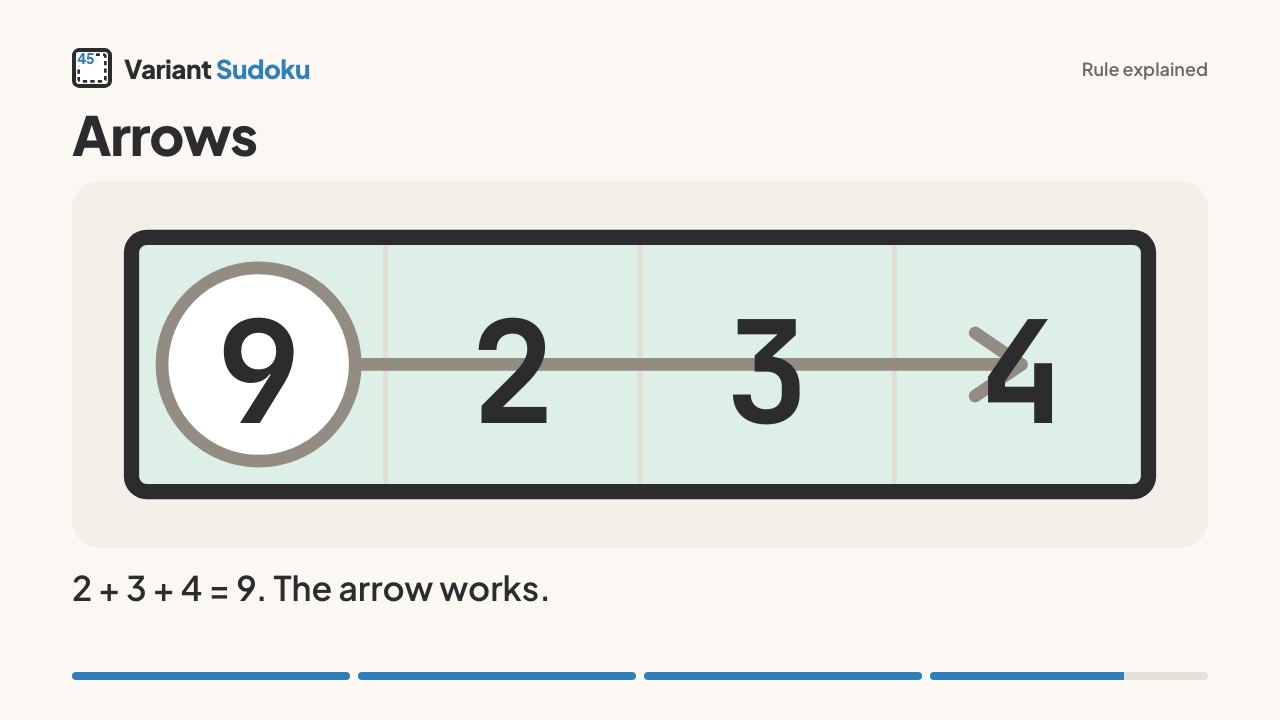 0:18ArrowsArrow Sudoku Rules Explained in One Short Example
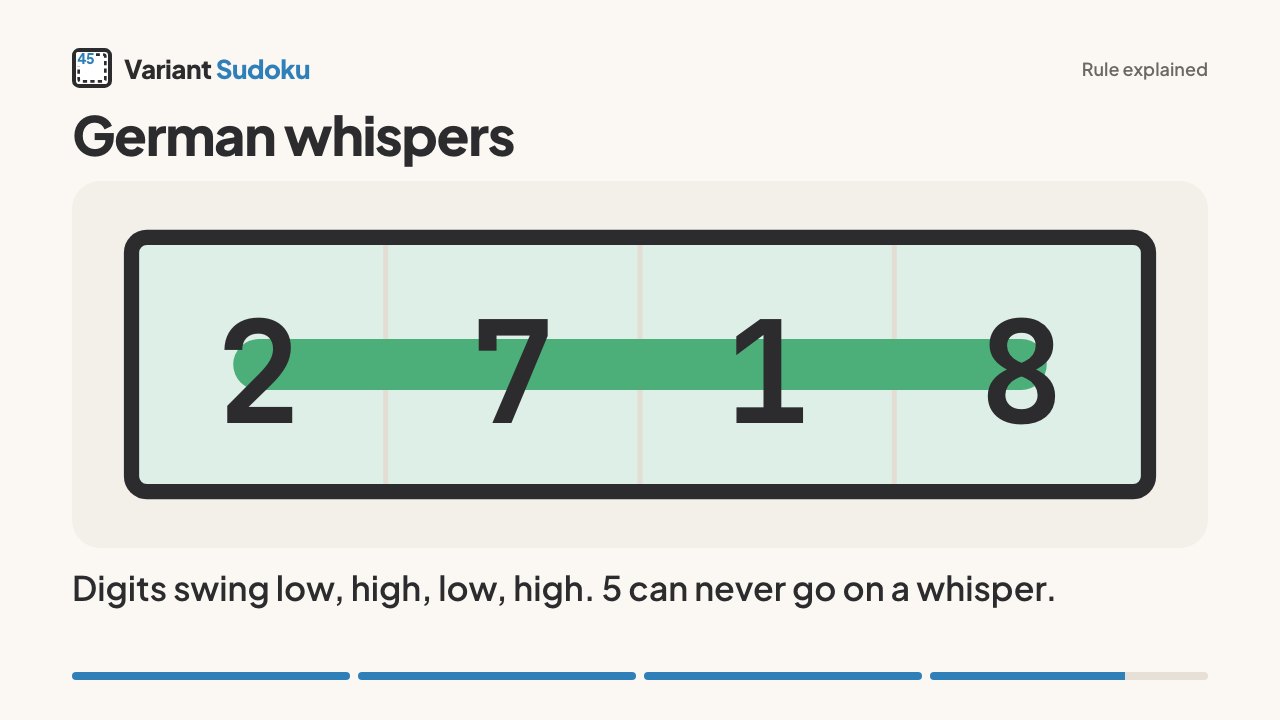 0:18German whispersGerman Whispers Sudoku Explained in One Short Example
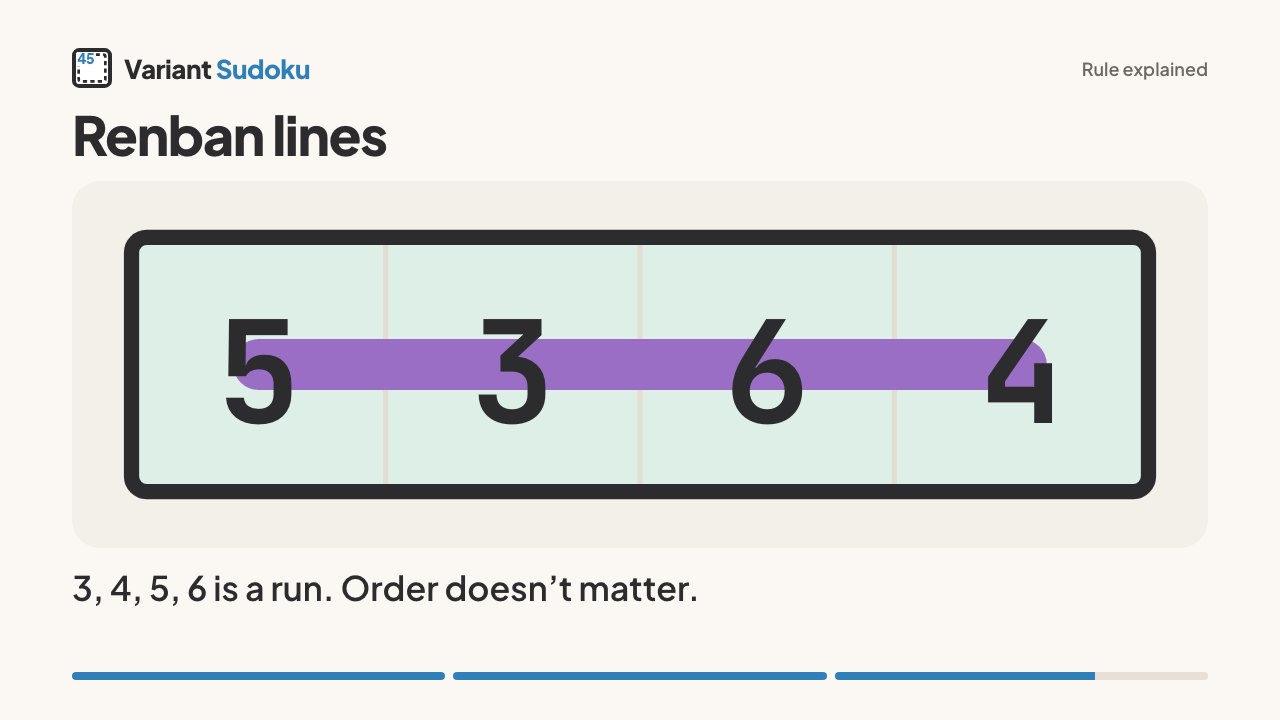 0:15Renban linesRenban Lines Explained in One Short Example
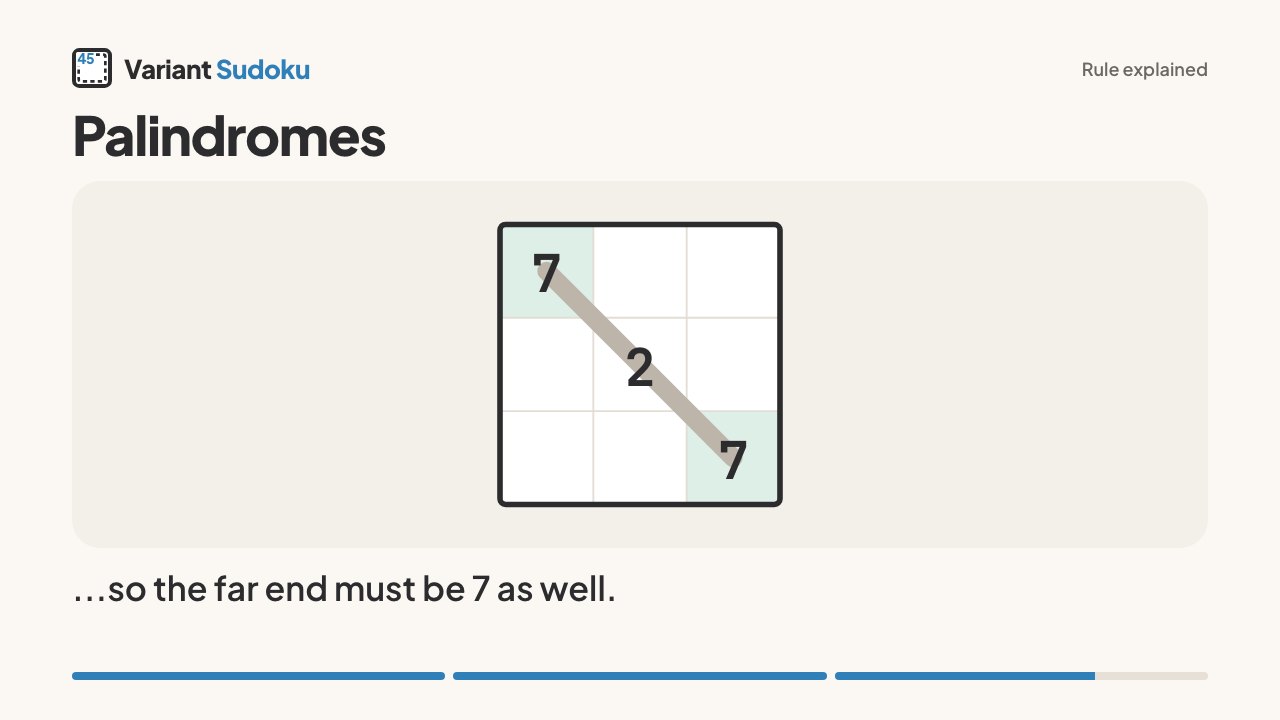 0:15PalindromesPalindrome Sudoku Lines Explained in One Short Example