Non-Consecutive Sudoku Explained in One Short Example
Three cells in a row show the non-consecutive rule. 4 and 5 side by side break it, and 4, 7, 2 passes because no neighbors are one apart.
Transcript
The rule
Non-consecutive sudoku adds one rule to the whole grid. Two cells that share an edge can't hold digits that are one apart, such as 3 and 4. Cells that touch only at a corner are not affected.
The rule applies to every pair of neighbors, so it cuts candidates everywhere. Digits from 2 to 8 have two consecutive partners, and 1 and 9 have only one.
Worth memorizing
A 5 rules out 4 and 6 in all four neighbors.
Diagonal neighbors are fine.
More rule videos
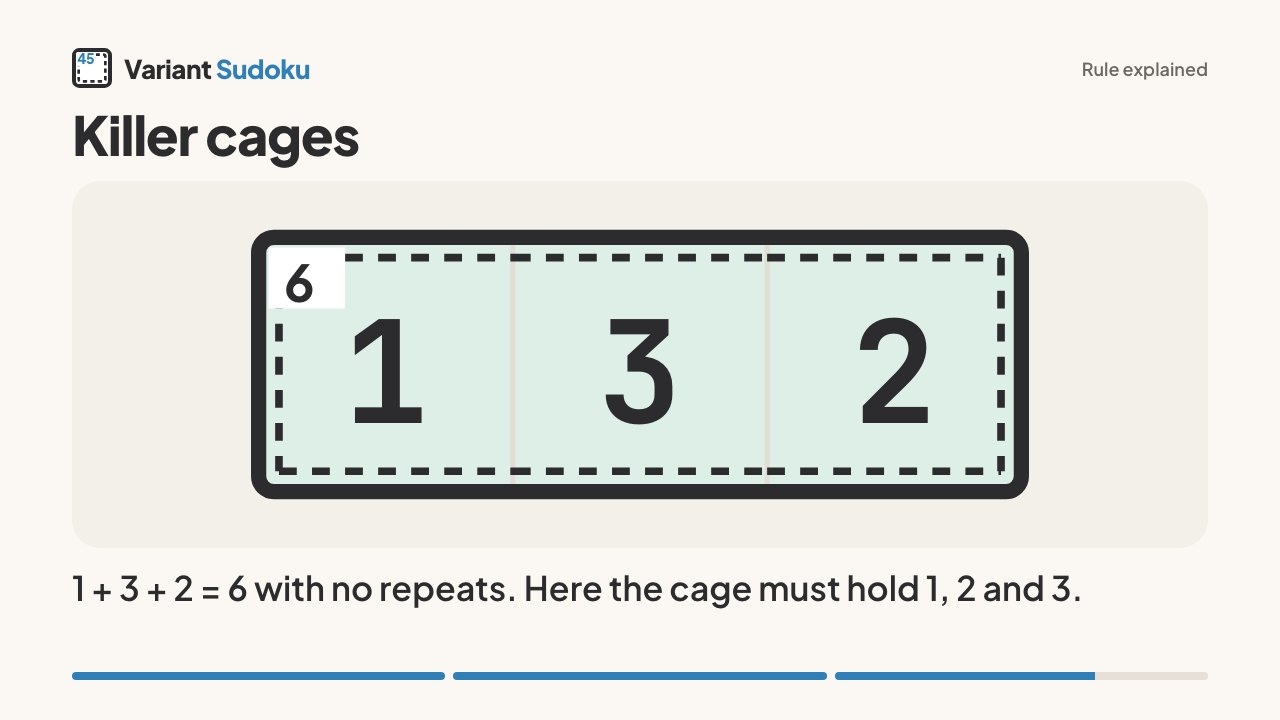 0:15Killer cagesKiller Sudoku Rules Explained in One Short Example
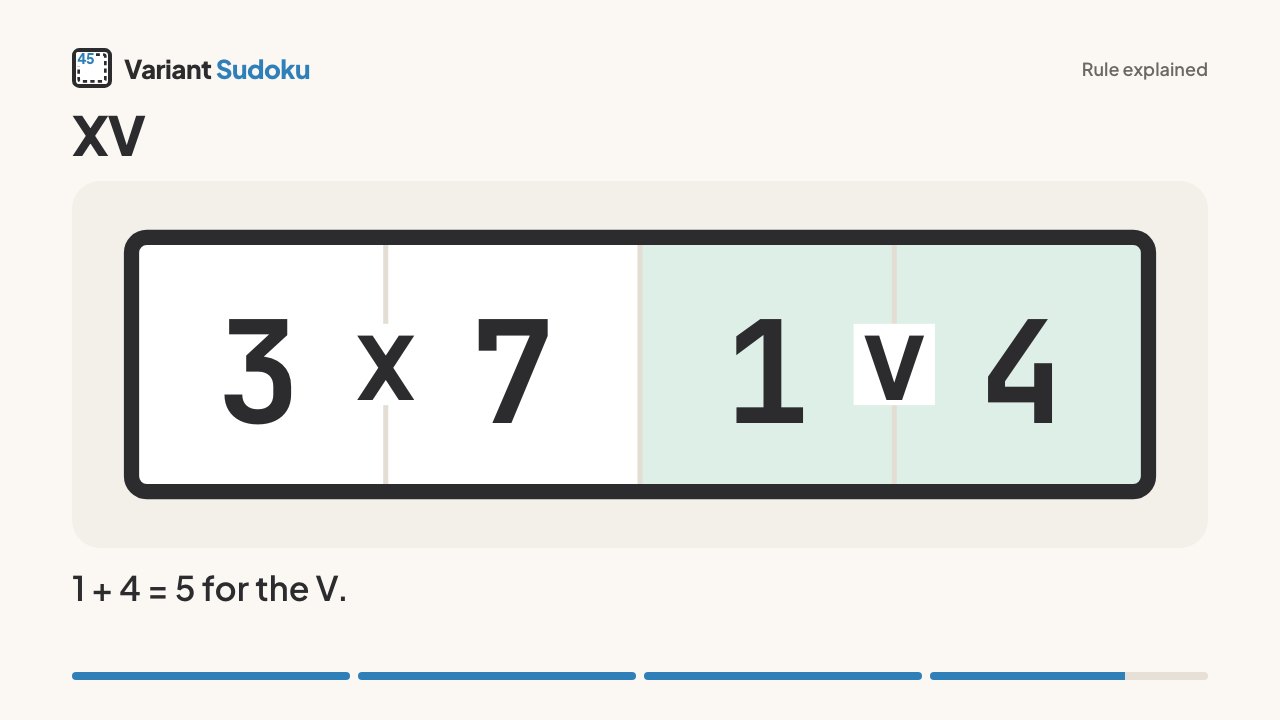 0:18XVXV Sudoku Rules Explained in One Short Example
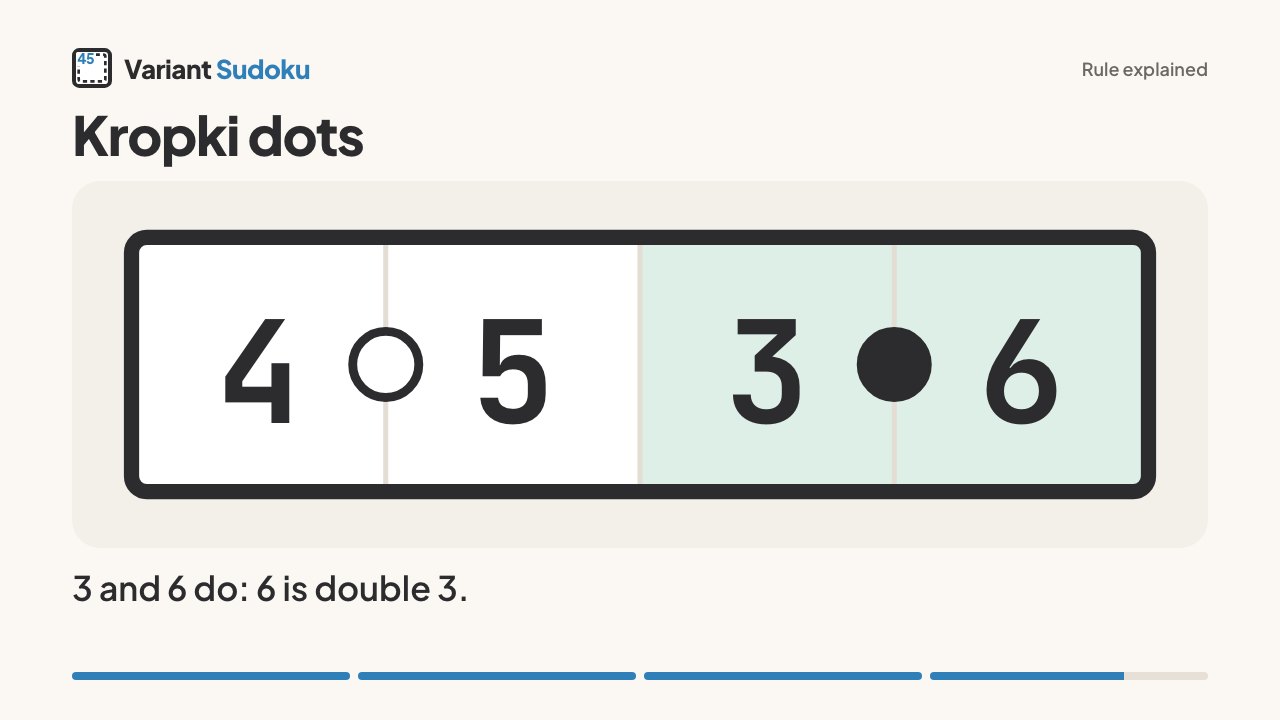 0:18Kropki dotsKropki Sudoku Dots Explained in One Short Example
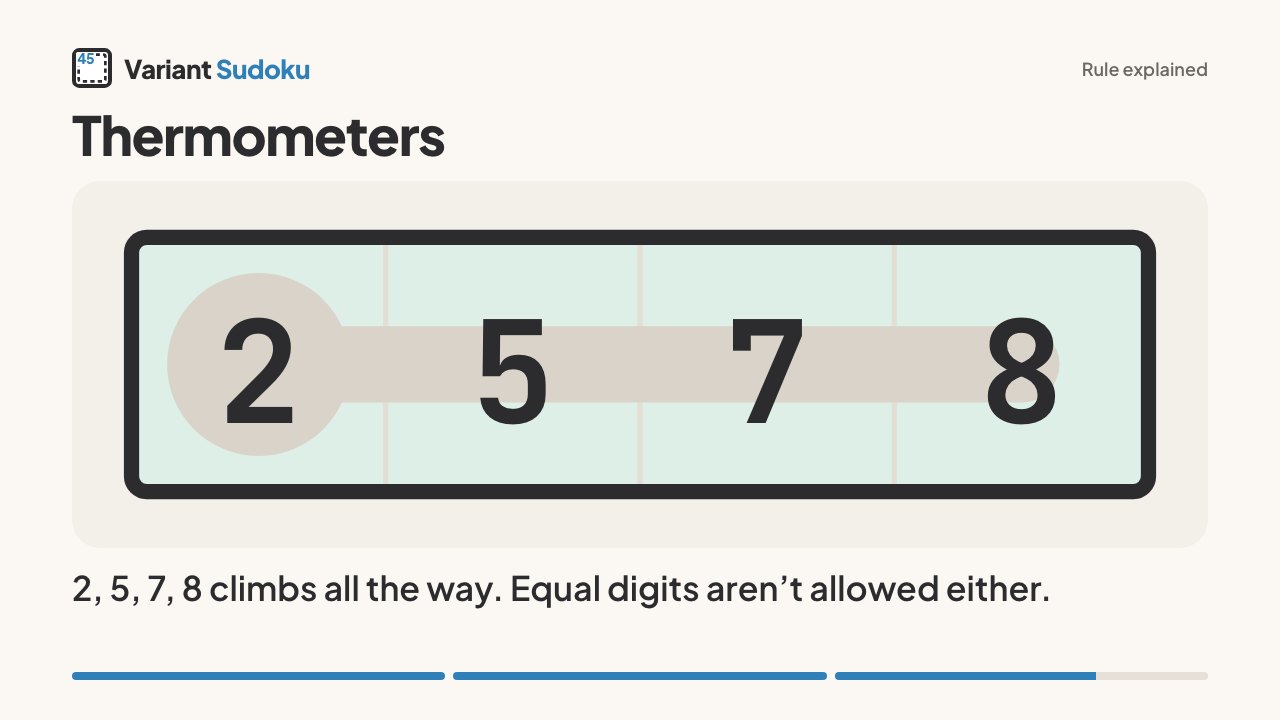 0:15ThermometersThermo Sudoku Rules Explained in One Short Example
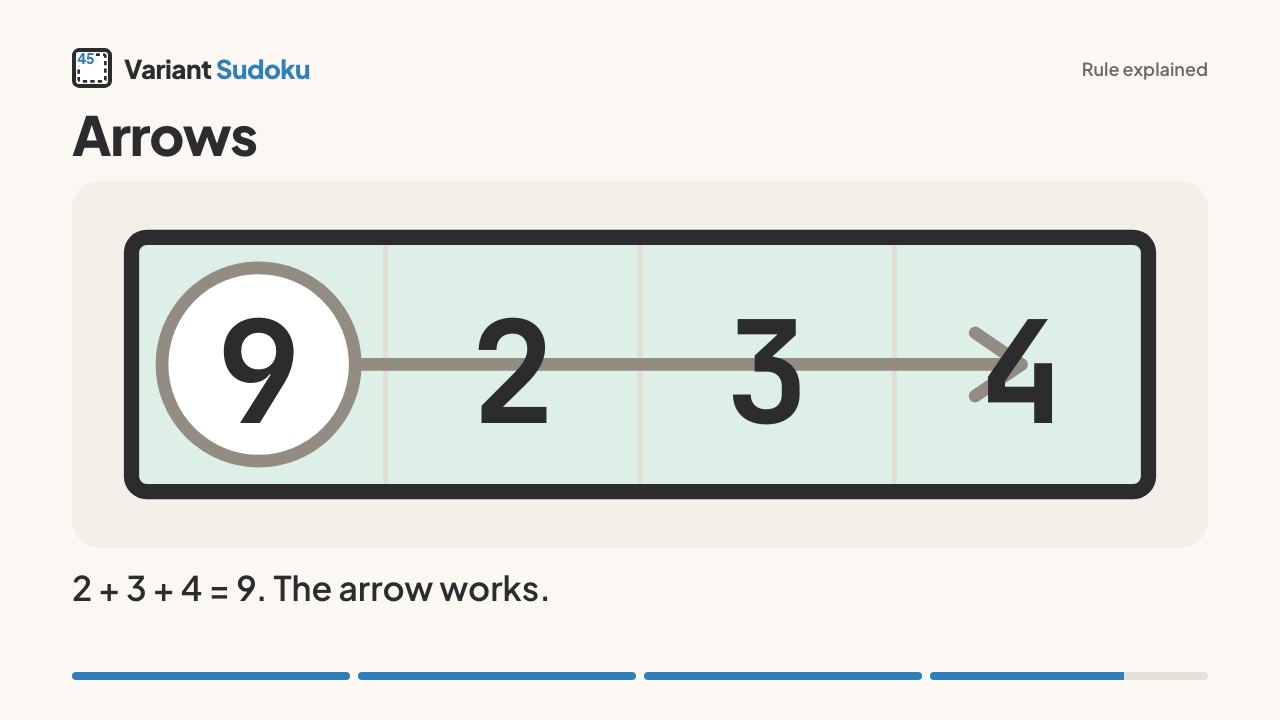 0:18ArrowsArrow Sudoku Rules Explained in One Short Example
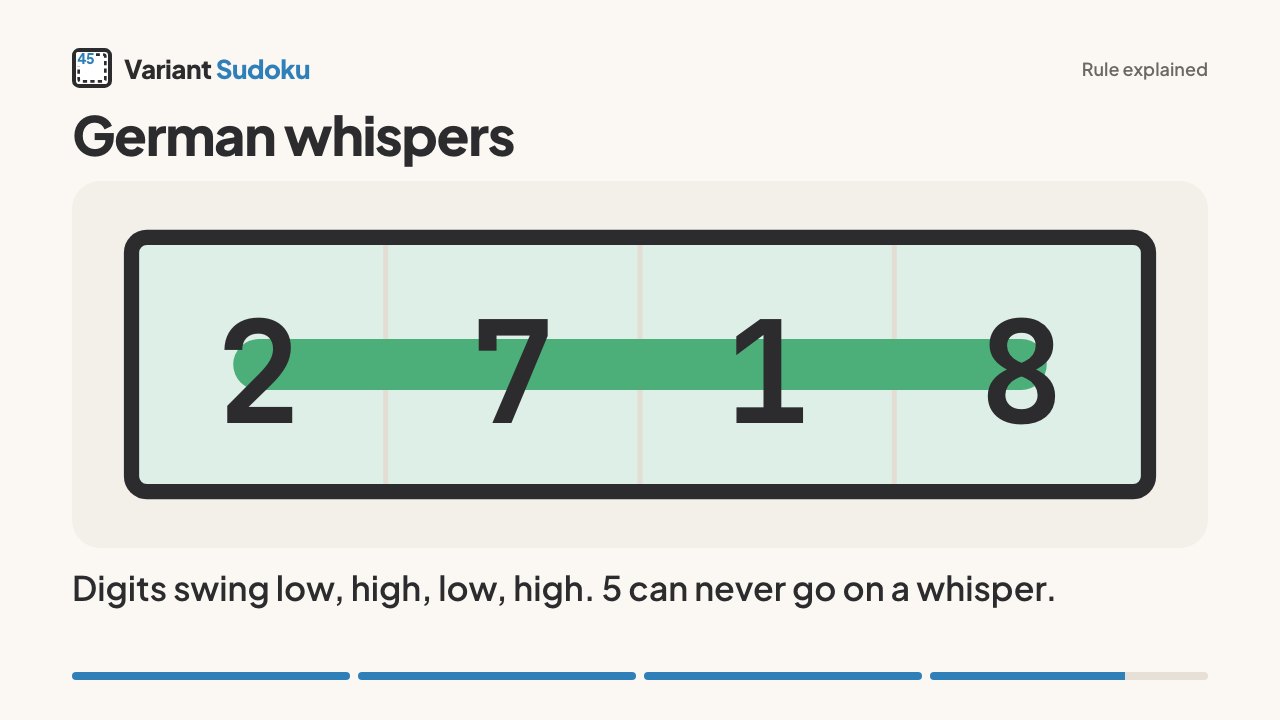 0:18German whispersGerman Whispers Sudoku Explained in One Short Example
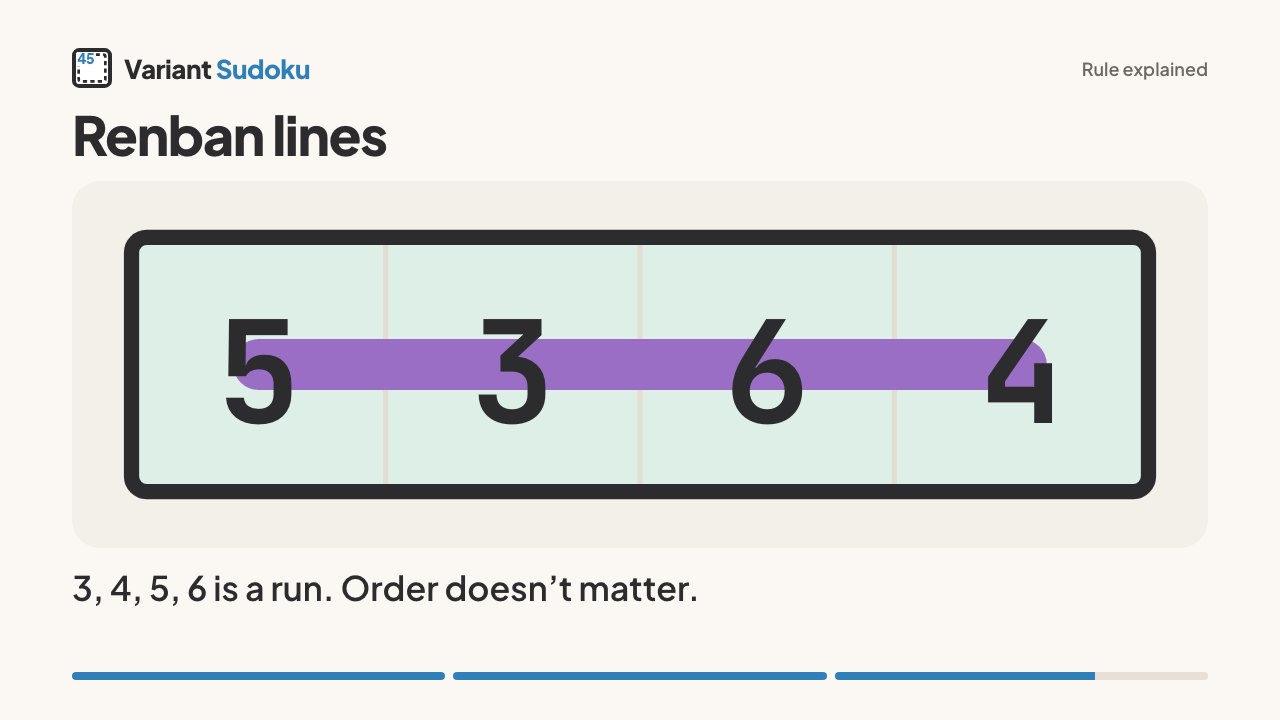 0:15Renban linesRenban Lines Explained in One Short Example
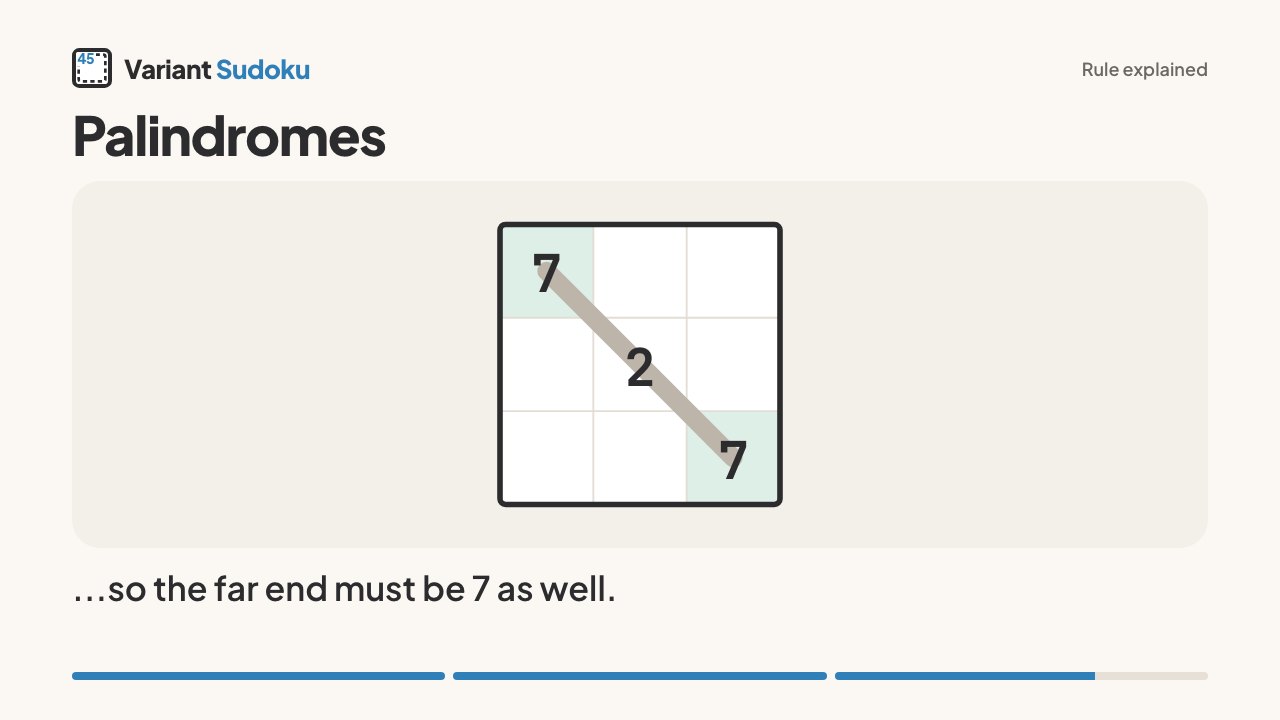 0:15PalindromesPalindrome Sudoku Lines Explained in One Short Example