Killer Sudoku Rules Explained in One Short Example
A three-cell cage with a total of 6 shows how killer sudoku works. 2 + 2 + 2 adds up to 6 but repeats a digit, so the cage must hold 1, 2 and 3.
Transcript
The rule
In killer sudoku, dashed outlines called cages group cells together. The small number in a cage's corner is the total of its digits, and no digit can repeat inside a cage. Normal sudoku rules still apply to every row, column and box.
Many killer puzzles start with few or no given digits, so the sums do the work. You solve by knowing which digit sets make each total and by adding up whole rows and boxes.
Worth memorizing
Some cages have only one combination.
Two cells: 3 is 1+2, 4 is 1+3, 16 is 7+9, 17 is 8+9. Three cells: 6 is 1+2+3, 24 is 7+8+9.
No repeats means no 5+5.
A two-cell cage of 10 can’t hold a 5.
Every full row, column and box adds up to 45.
Solvers call this the 45 rule, and it cracks most killers.
More rule videos
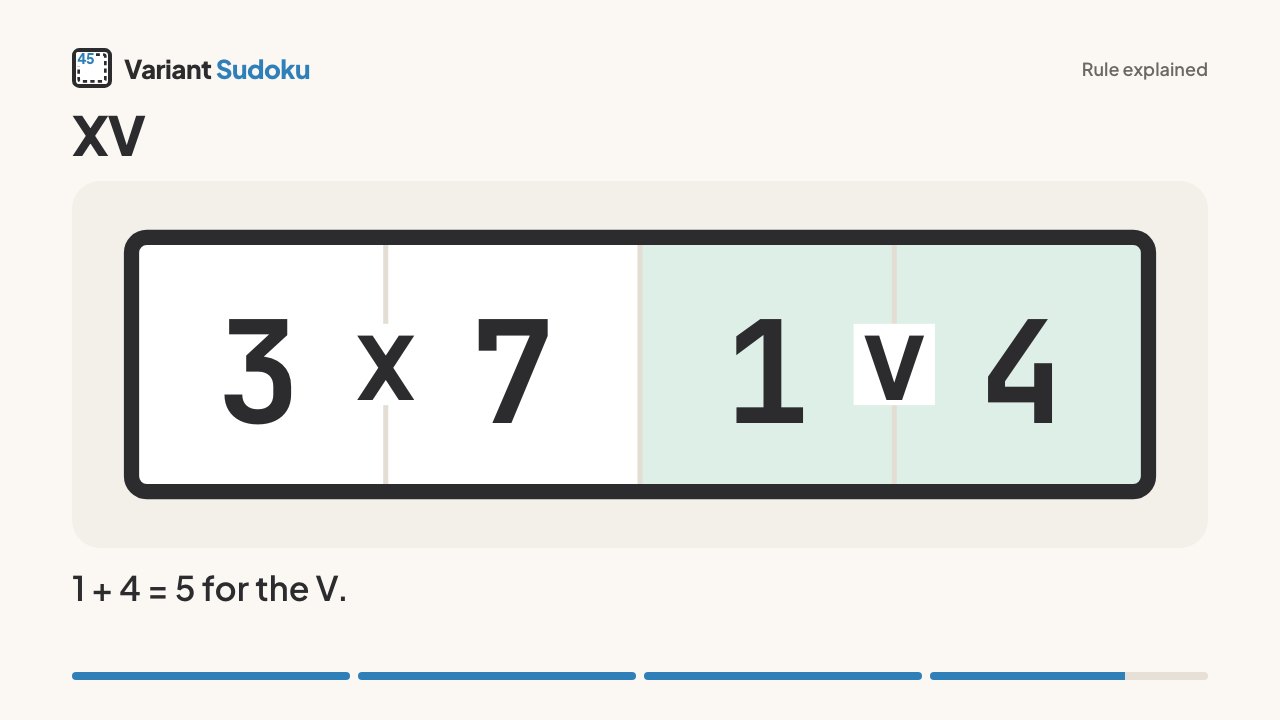 0:18XVXV Sudoku Rules Explained in One Short Example
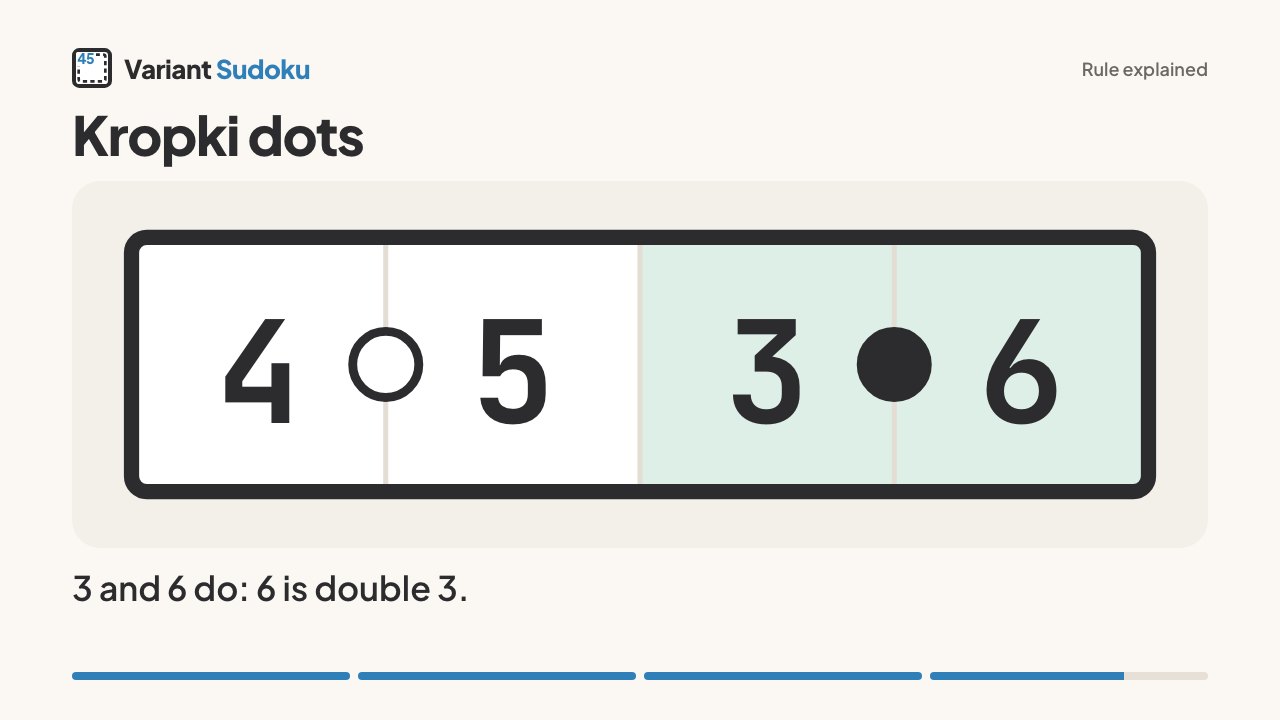 0:18Kropki dotsKropki Sudoku Dots Explained in One Short Example
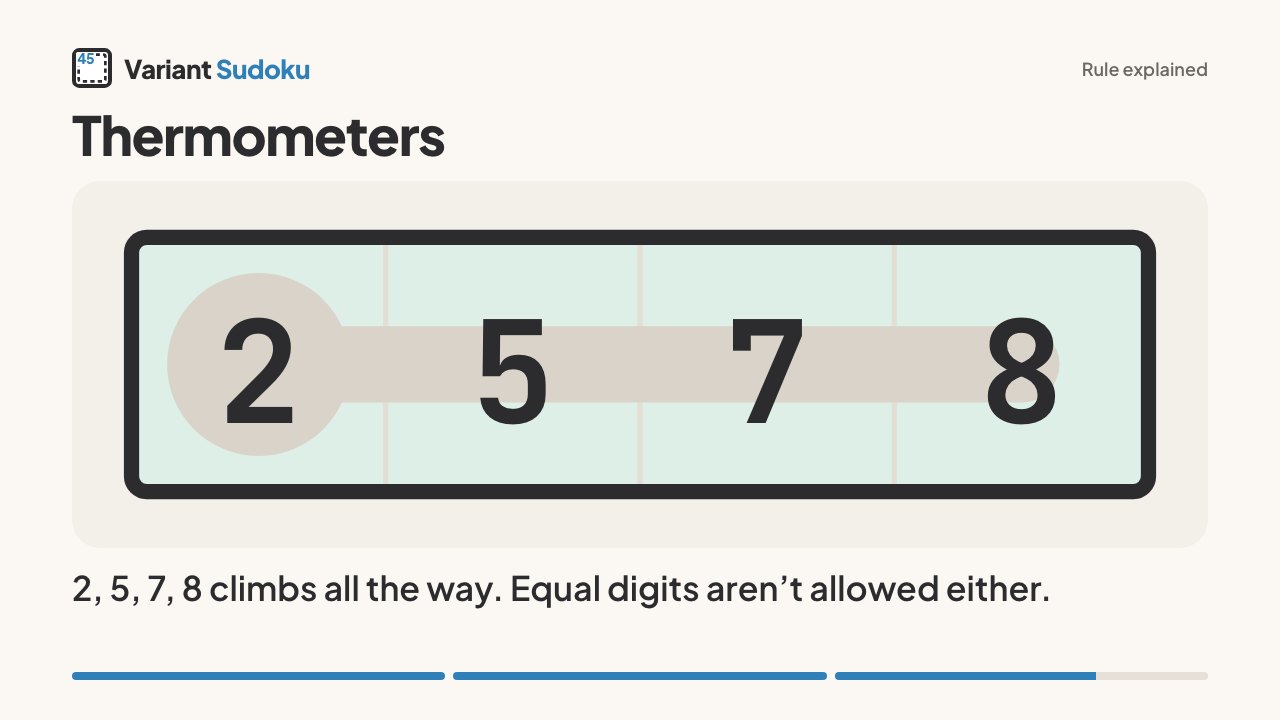 0:15ThermometersThermo Sudoku Rules Explained in One Short Example
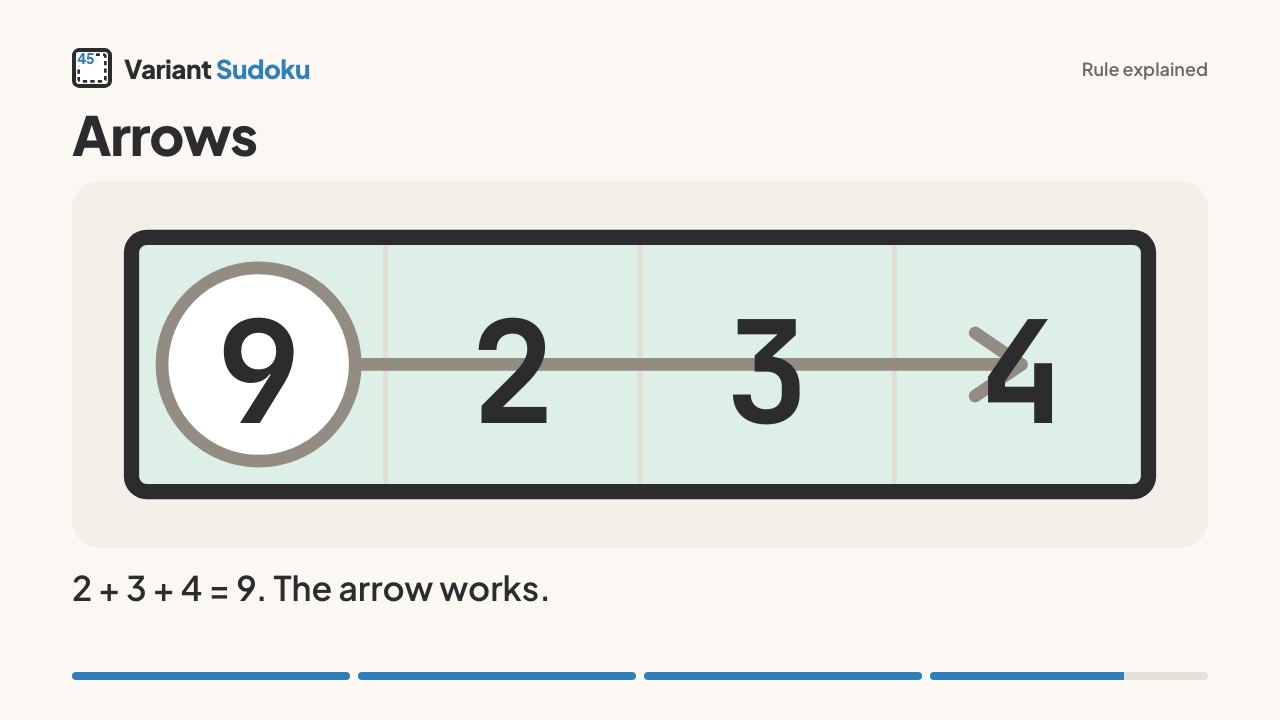 0:18ArrowsArrow Sudoku Rules Explained in One Short Example
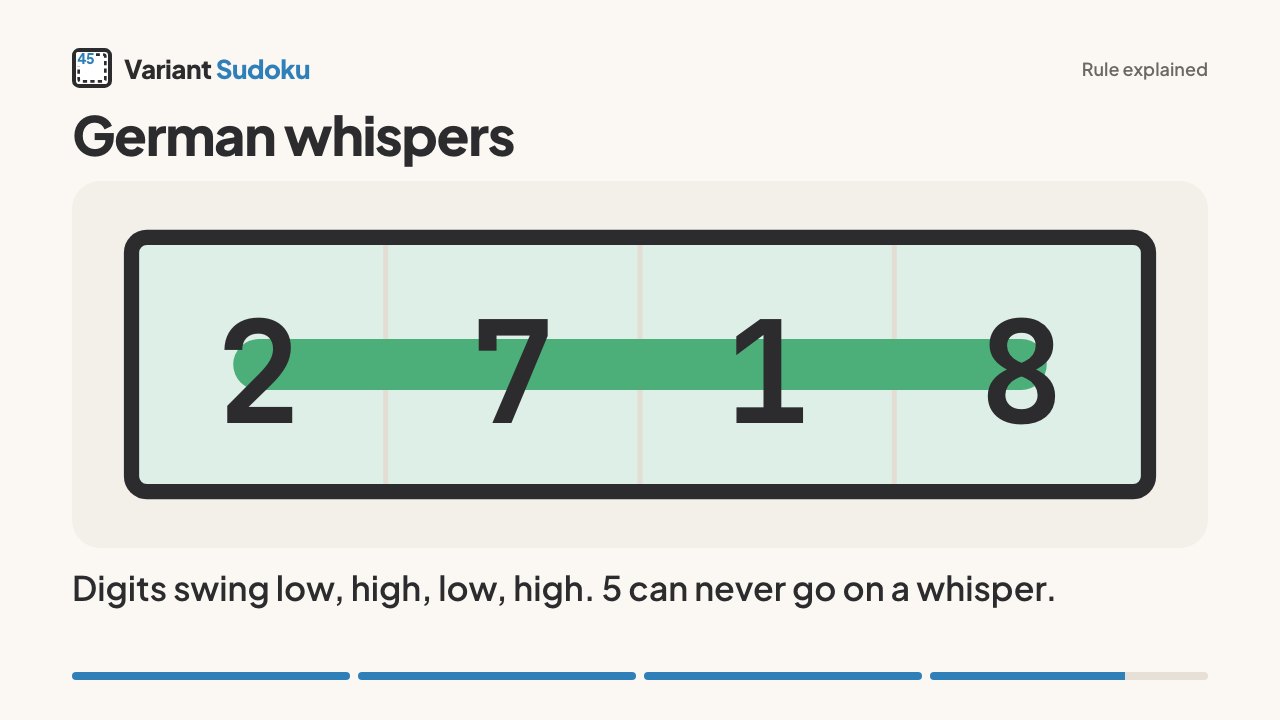 0:18German whispersGerman Whispers Sudoku Explained in One Short Example
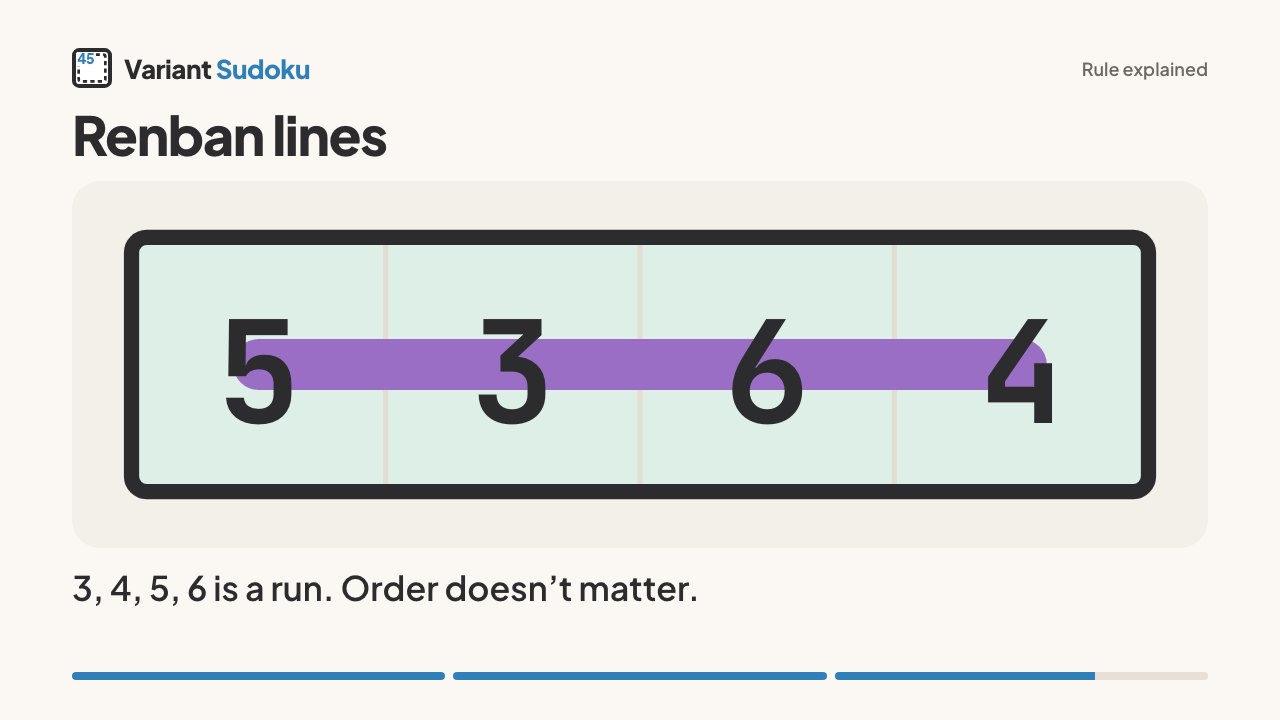 0:15Renban linesRenban Lines Explained in One Short Example
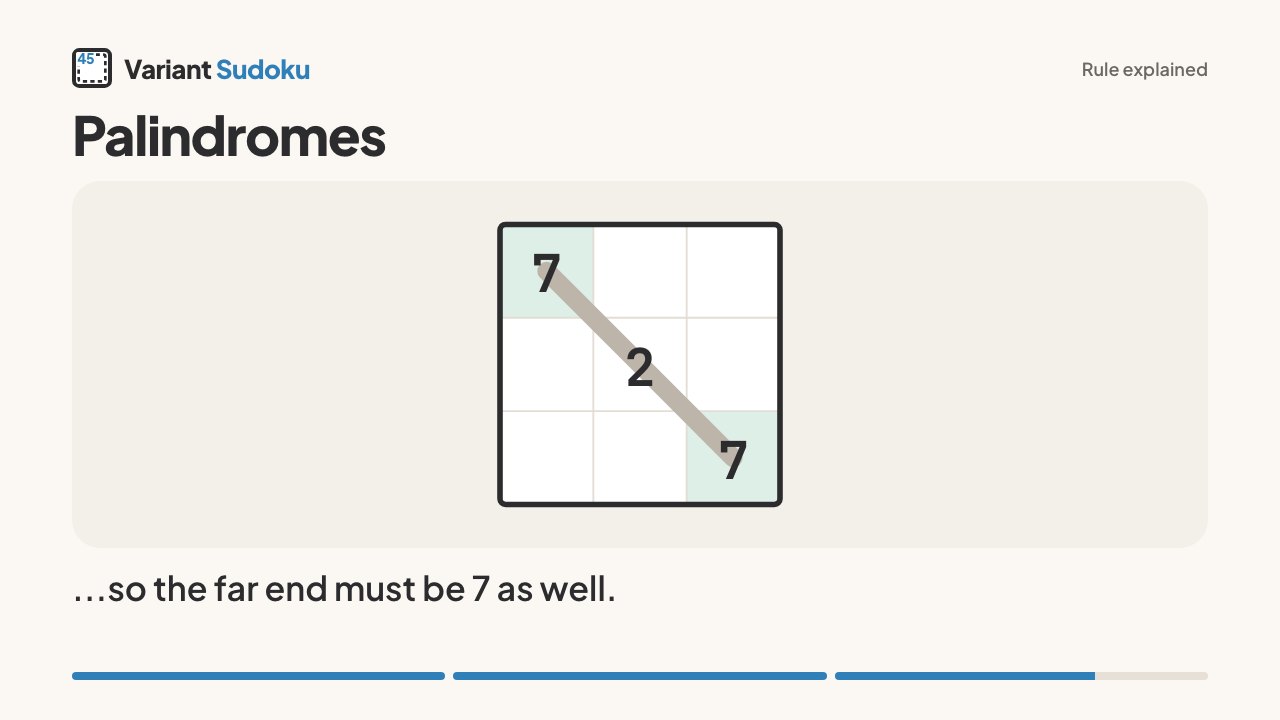 0:15PalindromesPalindrome Sudoku Lines Explained in One Short Example
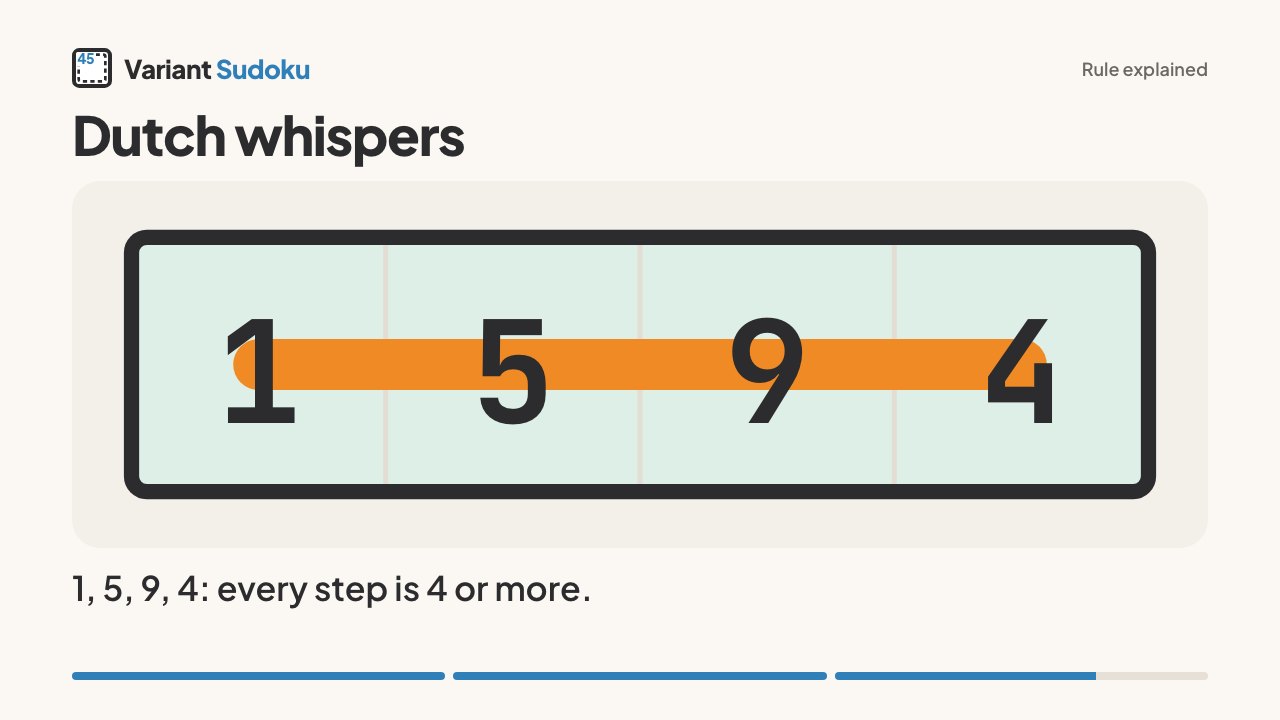 0:15Dutch whispersDutch Whispers Sudoku Explained in One Short Example