Dutch Whispers Sudoku Explained in One Short Example
An orange line shows the Dutch whispers rule. 1, 5, 3 fails because 5 and 3 are only 2 apart, and 1, 5, 9, 4 works because every step is 4 or more.
Transcript
The rule
A Dutch whispers line is usually orange. Any two cells next to each other on the line must differ by at least 4. Digits can repeat on the line if sudoku rules allow it.
The rule is a looser version of German whispers, which need a gap of 5. The extra room lets a 5 onto the line and makes the low-high pattern less strict.
Worth memorizing
5 is allowed, but only next to 1 or 9.
4 and 6 can’t sit next to each other or next to 5.
Low and high still tend to alternate, but 5 can break the pattern.
More rule videos
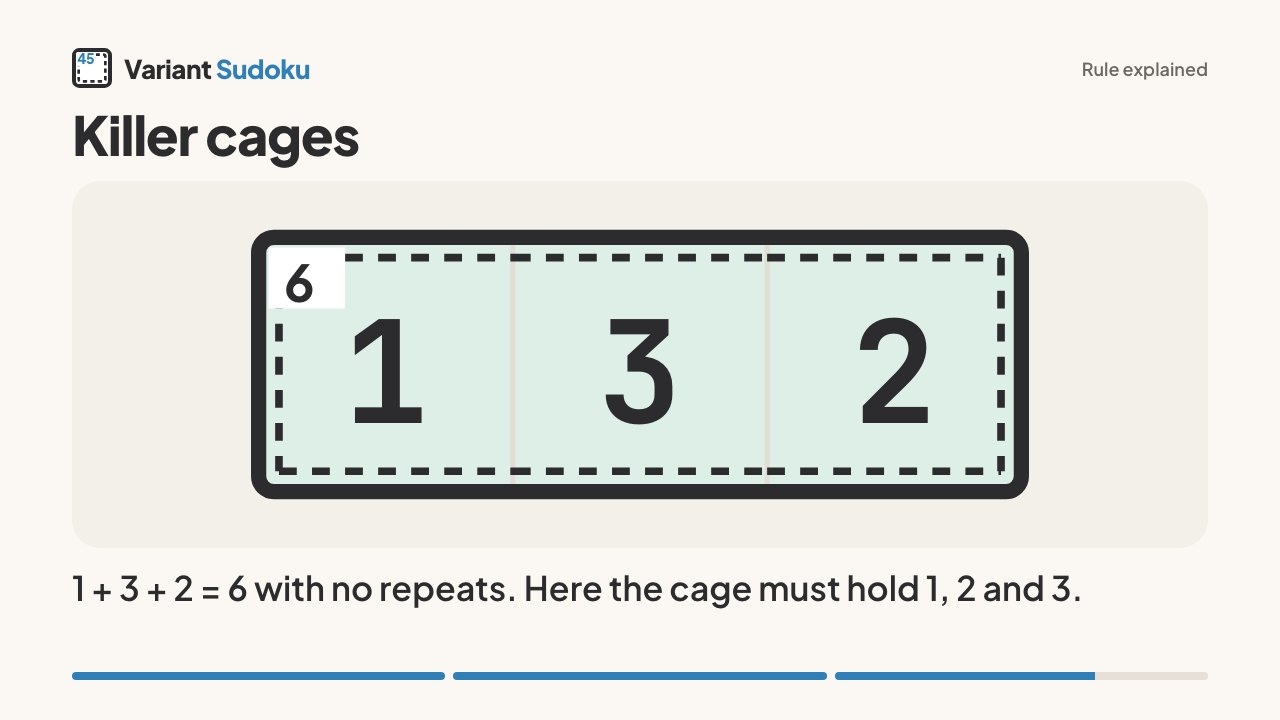 0:15Killer cagesKiller Sudoku Rules Explained in One Short Example
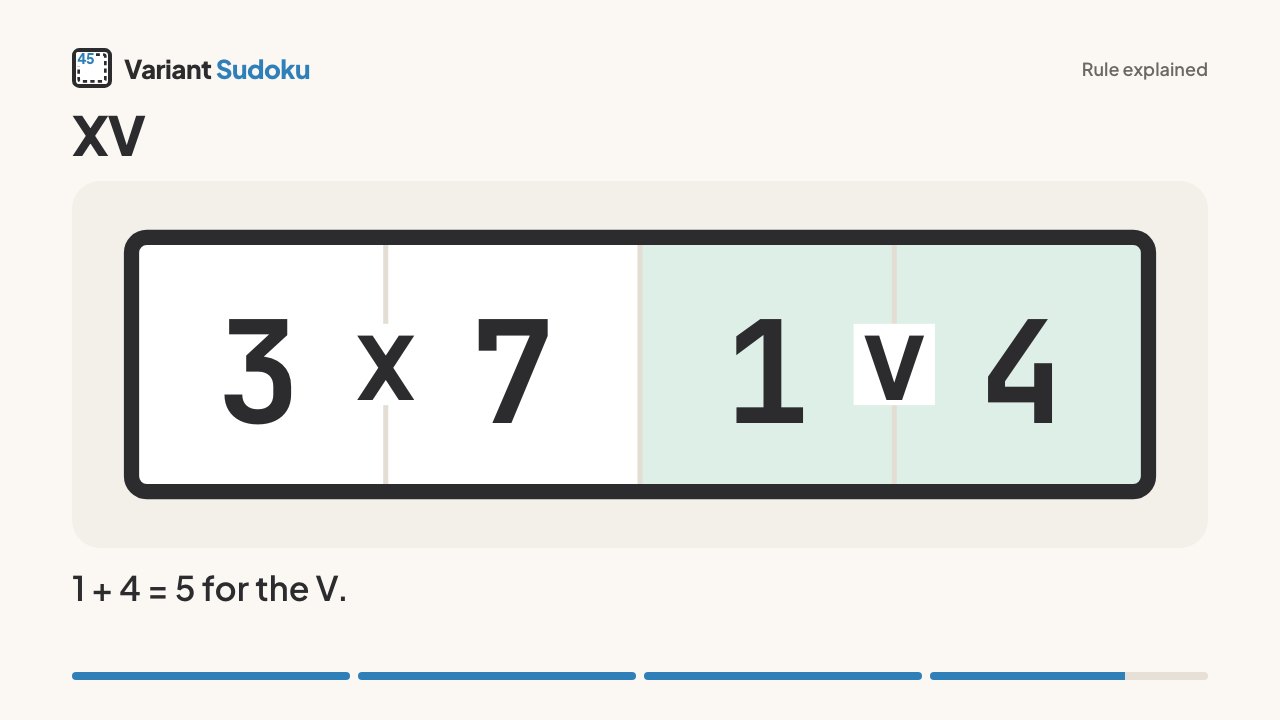 0:18XVXV Sudoku Rules Explained in One Short Example
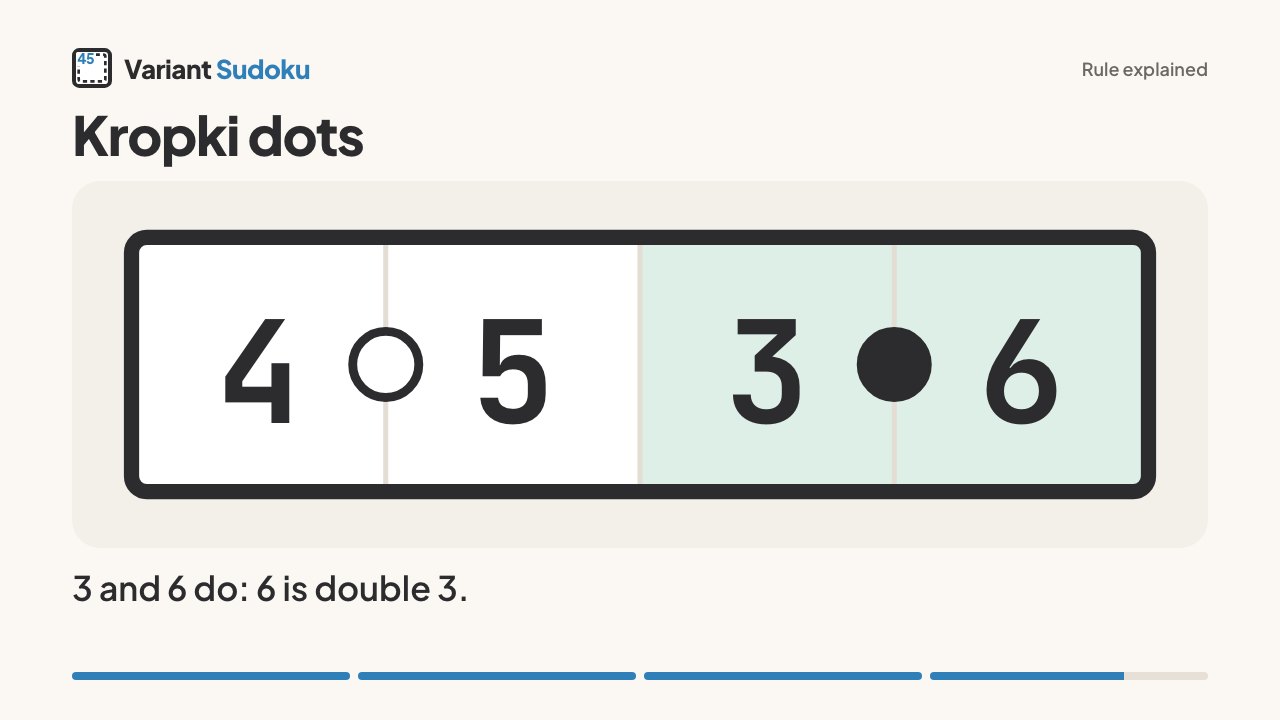 0:18Kropki dotsKropki Sudoku Dots Explained in One Short Example
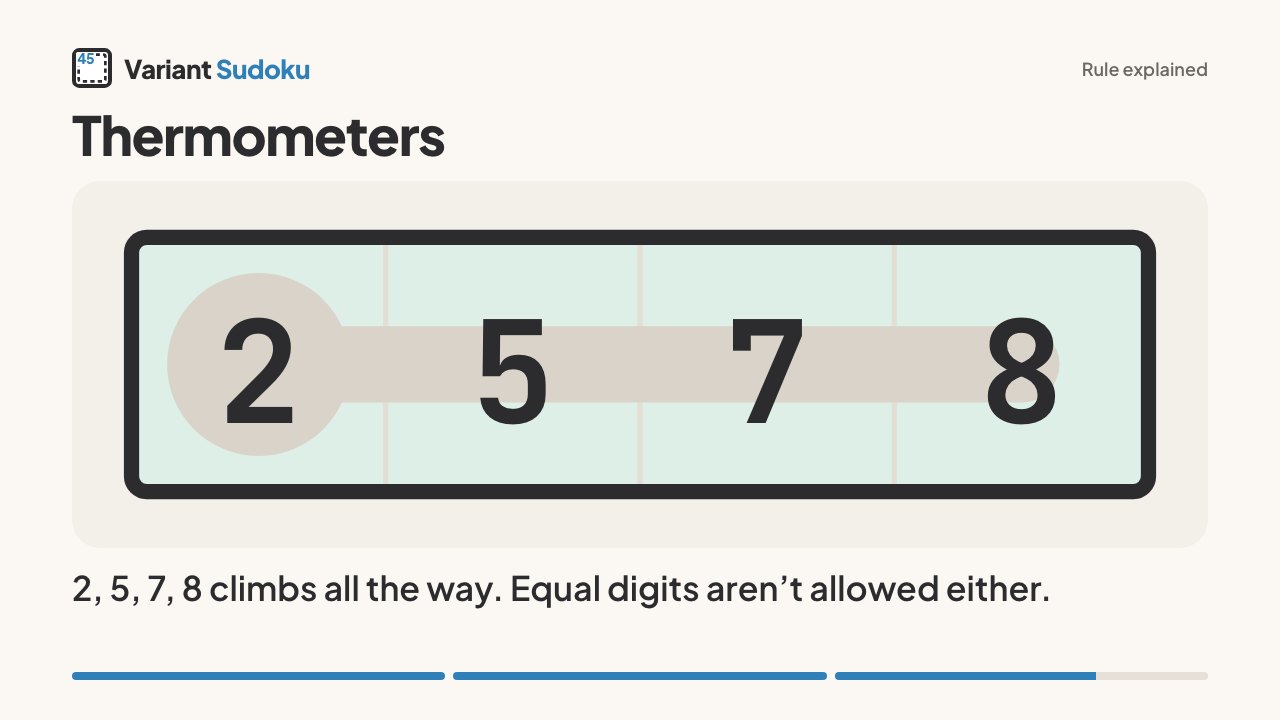 0:15ThermometersThermo Sudoku Rules Explained in One Short Example
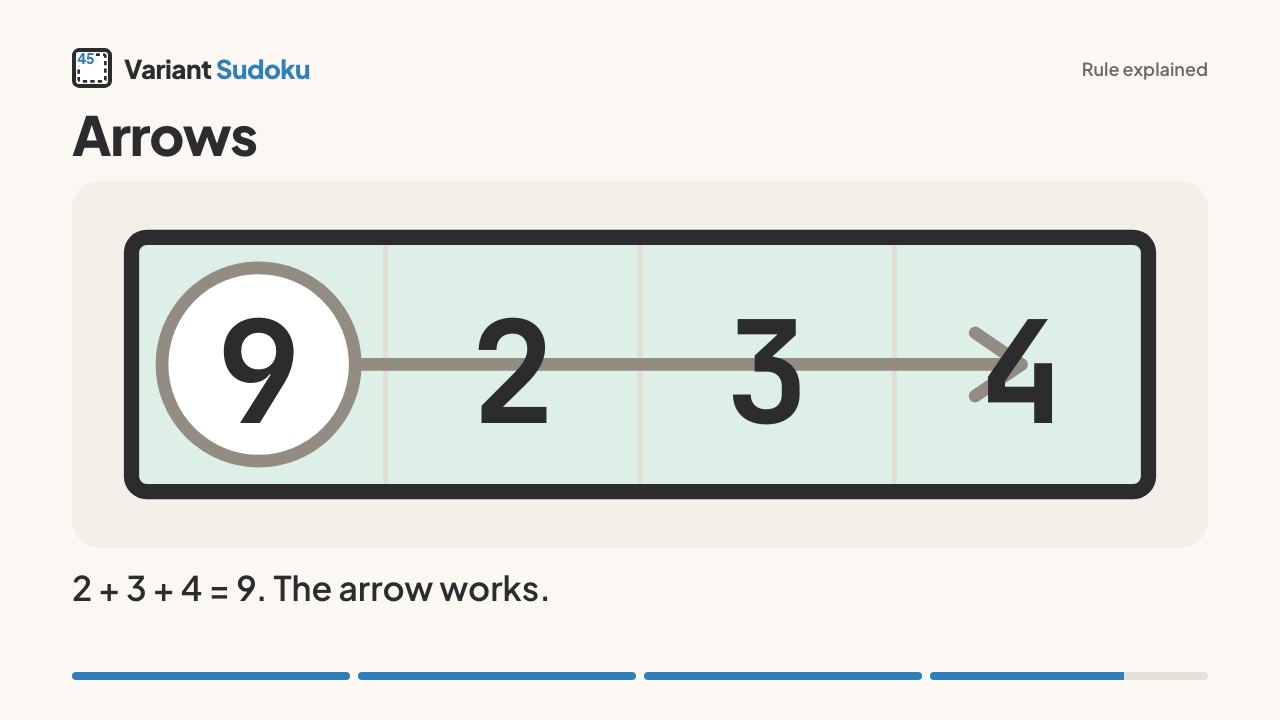 0:18ArrowsArrow Sudoku Rules Explained in One Short Example
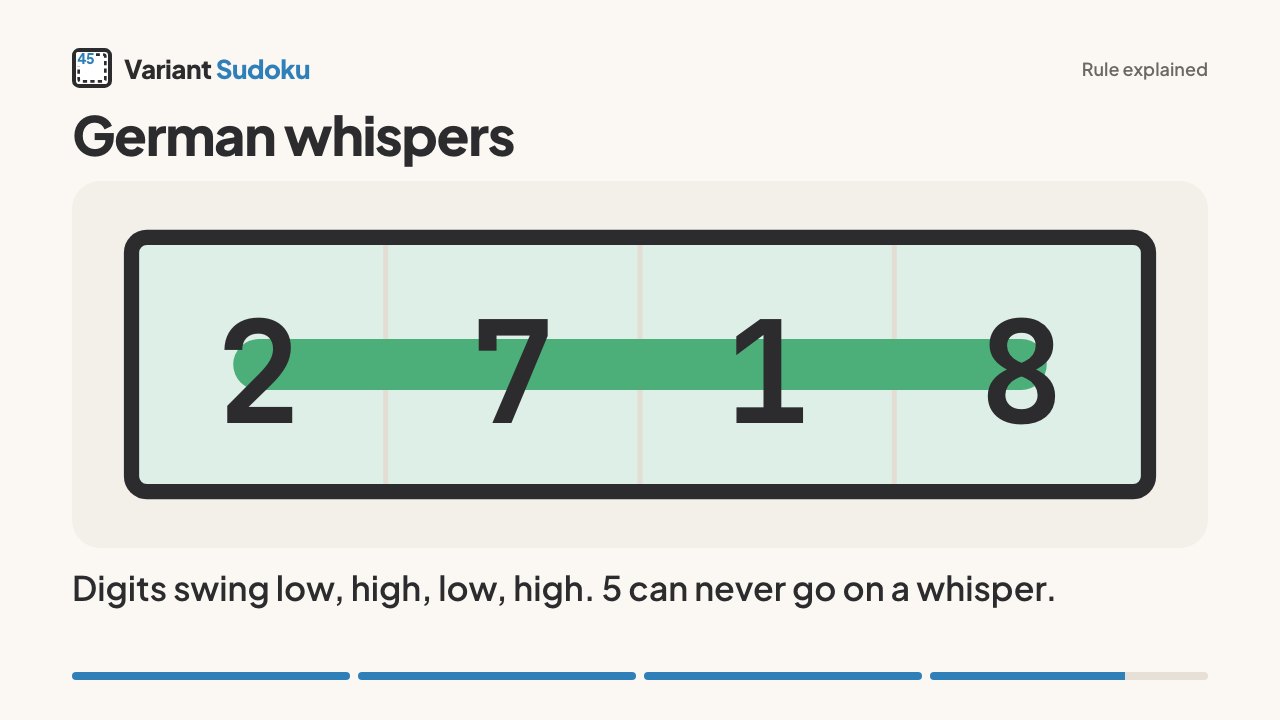 0:18German whispersGerman Whispers Sudoku Explained in One Short Example
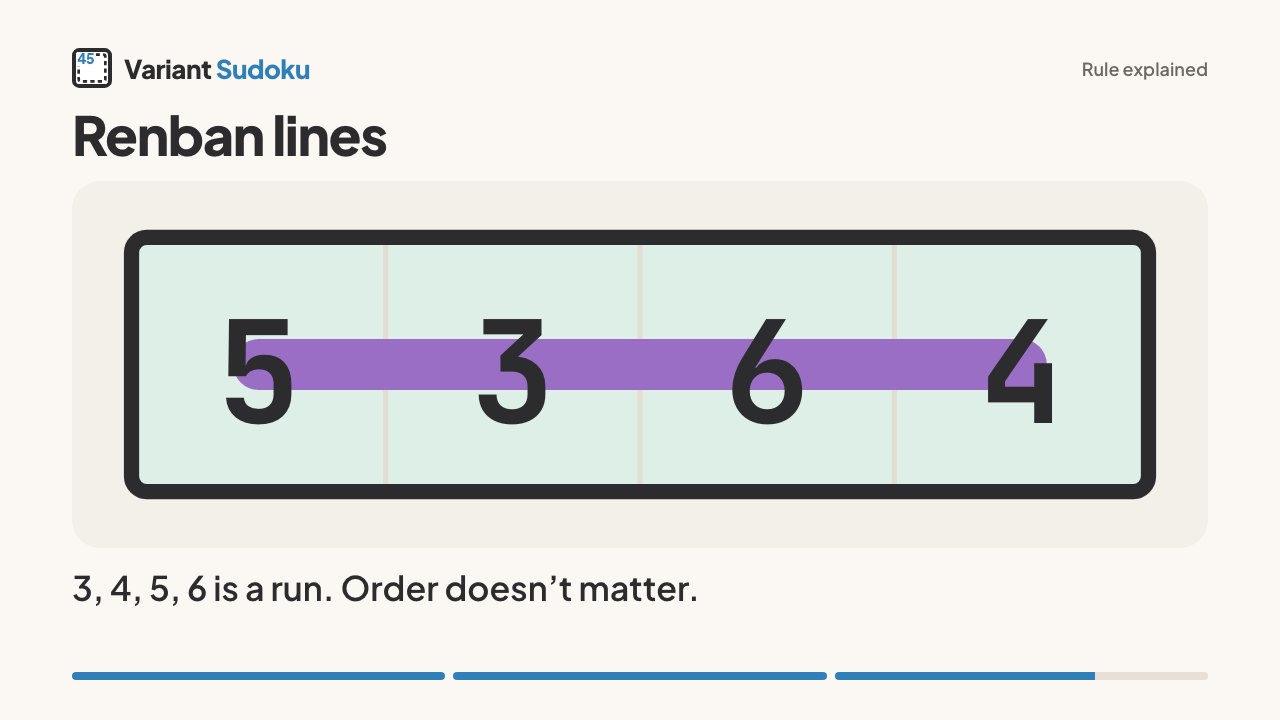 0:15Renban linesRenban Lines Explained in One Short Example
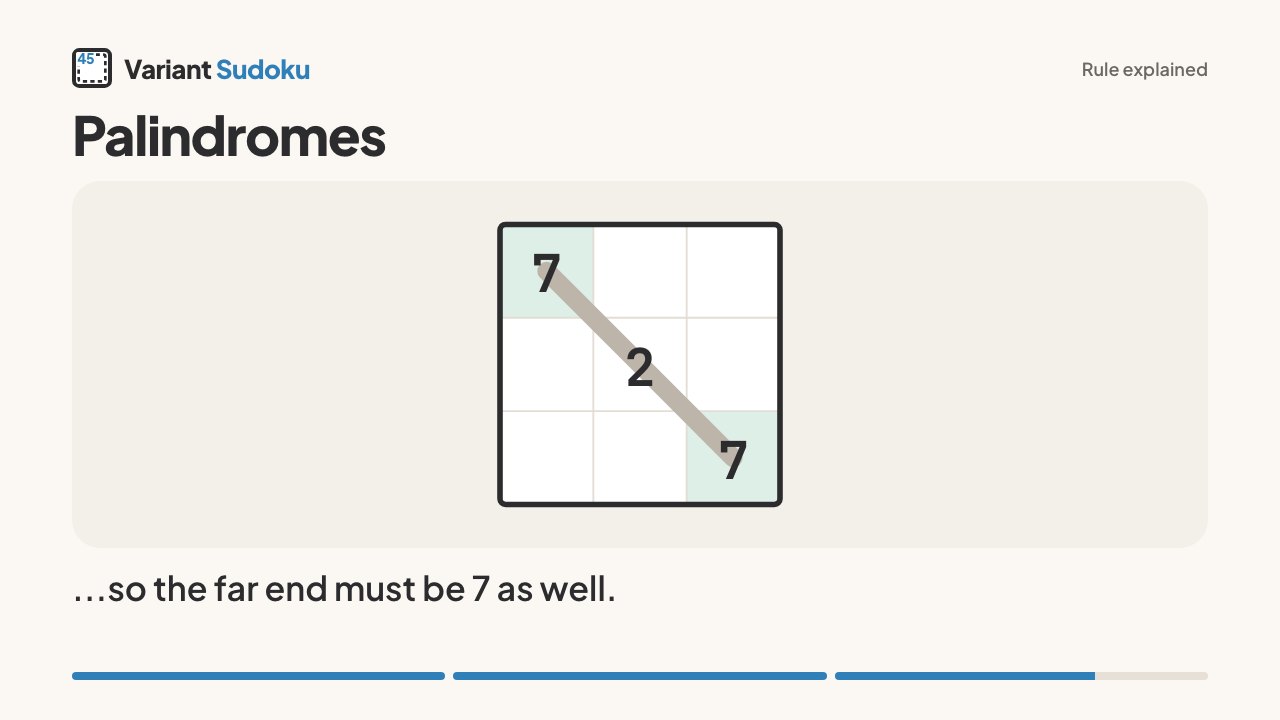 0:15PalindromesPalindrome Sudoku Lines Explained in One Short Example